

You already know something's wrong with the estate planning industry when families worth $50 million walk out of meetings more confused than when they arrived. For a quick overview of who we are and how we work, visit the Law Office of James Burns homepage.
The problem isn't what most attorneys think. It's not that clients don't understand complex tax codes or that they're overwhelmed by too many options. The real issue runs deeper: most estate planning conversations are designed to fail before the first word is spoken.
Here's why: nearly every attorney, CPA, and financial advisor has trained their clients to enter discussions trapped in the wrong Frame entirely.
The Documents Trap: Why Smart People Make Expensive Mistakes
Walk into any traditional estate planning meeting, and you'll hear the same broken conversation pattern within the first ten minutes:
"We need to update your will and trust documents."
"What's this going to cost?"
"How long until the paperwork is ready?"
This isn't estate planning: it's estate processing. And processing documents is exactly how $20 million fortunes get systematically dismantled by creditors, divorce attorneys, and tax authorities who understand something most families don't: documents don't protect wealth. Architecture does.
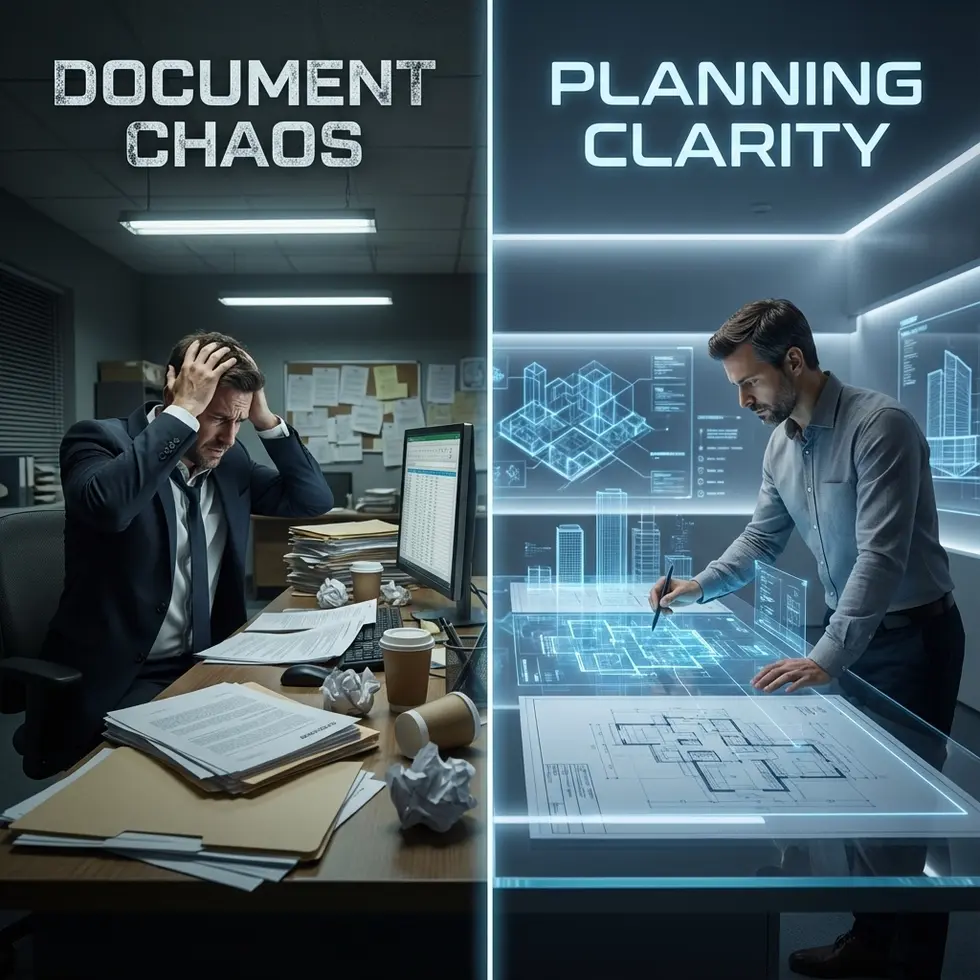
The moment a conversation begins with "documents," "forms," or "updating paperwork," the entire planning process has already been compromised. You're now operating inside a Frame where success is measured by completion of tasks rather than creation of outcomes.
Smart families fall into this trap because they've been conditioned by previous advisors to think about estate planning as a product purchase rather than wealth defense architecture. The result? They spend years accumulating beautifully drafted documents that provide zero protection when actual threats emerge.
Why Traditional Consultations Create Planning Disasters
Most estate planning "consultations" are built on a fundamentally flawed assumption: that families and their advisors start from equal positions of knowledge and authority.
This creates what we call consultation drift: conversations that meander through surface-level concerns while completely missing the structural vulnerabilities that will destroy generational wealth.
Here's what happens in a typical consultation:
The attorney asks diagnostic questions about assets, family structure, and "goals." The family answers based on assumptions they don't realize they're making. Both parties operate from incomplete information about what threats actually exist and what protection systems are required to neutralize them.
The conversation focuses on familiar concepts: tax savings, probate avoidance, "keeping it simple": while sophisticated predators (creditors, ex-spouses, regulatory authorities) prepare strategies that assume families will remain trapped in exactly these limited frameworks.
By the time the meeting ends, both the attorney and the family believe they've accomplished something meaningful. In reality, they've just agreed to build a wealth defense system using the wrong blueprints entirely.
The Authority Reversal That Changes Everything
Advanced wealth protection requires a complete reversal of the traditional consultation dynamic.
Instead of meetings that assume equal footing between families and advisors, sophisticated planning begins with what we call a Situation Readiness Briefing (SRB): a structured assessment process that immediately establishes the correct Frame for all subsequent planning discussions.
An SRB operates from a different set of presuppositions:
- The family's current planning contains vulnerabilities they haven't identified
- Traditional approaches are insufficient for their level of complexity and risk
- Effective protection requires architectural coordination across multiple jurisdictions and asset classes
- The planning process itself must be designed to evolve with changing threats
This isn't consultation: it's strategic briefing. The difference matters because briefings assume leadership, authority, and specialized knowledge on the advisor's side, while consultations assume exploration and shared decision-making.
When families enter planning discussions through a properly structured SRB, they immediately understand they're engaging with architecture, not paperwork. The conversation shifts from "What documents do we need?" to "What threats require neutralization, and what systems will accomplish that?"
FortressWall™ Planning: Architecture vs. Assembly
Most estate planning follows an assembly model: take existing products (trusts, LLCs, insurance policies) and combine them based on surface-level objectives (tax reduction, privacy, control).
FortressWall™ planning operates from architectural principles: design integrated systems that assume sophisticated threats and create multiple layers of protection that reinforce rather than compete with each other.
The architectural approach starts with threat modeling: identifying specific vulnerabilities in the family's wealth structure, business operations, and personal circumstances that require dedicated defensive systems.
Consider a family with $30 million in business value who needs liquidity for a potential sale. The assembly approach creates separate solutions: installment sale structuring for tax deferral, an LLC for asset protection, and life insurance for estate tax liquidity.
The architectural approach designs an integrated system where Dynasty Trusts coordinate with Private Placement Life Insurance wrapped around specifically structured entities that assume both successful sale and aggressive creditor challenge scenarios. For a deeper dive into policy design and compliance, see our Private Placement Life Insurance (PPLI) service guide.
One approach creates documentation. The other creates outcomes.
The Complexity Signal: Why Simple Solutions Signal Insufficient Planning
Here's a Frame correction that sophisticated families understand intuitively: if your estate plan can be explained in a brief conversation, it's probably inadequate for your level of wealth and complexity.
This doesn't mean plans should be complicated for complexity's sake. It means that multi-generational wealth protection at the $10 million and above level requires coordination across systems that traditional planning simply doesn't address.
Consider the ultra-wealthy's assumptions before they ever contact an attorney: they presuppose privacy, control, tax efficiency, creditor protection, and regulatory defense as minimum requirements, not aspirational goals.
Most planning conversations fail because they operate from middle-class assumptions (tax savings, probate avoidance, family harmony) when ultra-high-net-worth protection requires entirely different frameworks.
When planning is properly architected for wealth at scale, the resulting systems naturally involve multiple entities, jurisdictions, and coordination mechanisms that reflect the complexity of the threats being addressed.
Timing vs. Structure: The Wrong Question That Destroys Outcomes
Most families ask "When should we begin estate planning?" when the correct question is "What architecture must exist before the next wealth event occurs?"
This timing focus creates planning disasters because it assumes threats arrive on convenient schedules. In reality, lawsuits, divorces, regulatory investigations, and tax law changes arrive when families are least prepared to respond.
Architectural planning assumes that protective systems must be operational before threats emerge, because defensive moves made after conflicts begin are typically too late to be effective.
Sophisticated families understand that wealth defense architecture requires the same forward-thinking approach as business strategy: systems are designed and implemented during periods of stability so they're available during periods of crisis.
FAQ: Estate Planning Conversation Strategy
Q: How do I know if my current estate planning conversation is trapped in the wrong Frame?
If your meetings focus on document types, costs, or completion timelines rather than threat analysis and architectural design, you're operating in a documents Frame rather than a protection Frame. Advanced planning conversations begin with vulnerability assessment, not product selection.
Q: What's the difference between a consultation and a Situation Readiness Briefing?
Consultations assume equal footing and exploration of options. SRBs assume leadership and specialized knowledge on the advisor's side, with structured assessment of the family's readiness for sophisticated planning. The Frame difference creates entirely different outcomes.
Q: Why would I want my estate plan to be complex?
Complexity isn't the goal: effectiveness is. Multi-generational wealth protection at high asset levels naturally requires coordination across multiple systems because the threats being addressed are sophisticated. Simple solutions typically indicate insufficient protection for serious wealth levels.
Q: How does architectural planning differ from traditional estate planning?
Traditional planning assembles existing products. Architectural planning designs integrated systems that assume sophisticated threats and create reinforcing layers of protection. The approach determines whether you get documentation or outcomes.
Explore more articles in our blog archive.
Take Action: Reframe Your Wealth Defense Strategy
If your current estate planning conversations focus on documents, costs, or simple solutions, you're operating in the wrong Frame for serious wealth protection.
Advanced planning begins with proper Frame architecture and threat assessment, not product selection. Our Situation Readiness Briefing process immediately establishes whether your current approach is adequate for your wealth level and complexity: or whether architectural redesign is required.
Contact the Law Office of James Burns to schedule your strategic wealth defense assessment. Because sophisticated threats require architectural solutions, not assembled documents.
Disclaimer: This article is for informational purposes only and does not constitute legal advice. Estate planning strategies should be tailored to individual circumstances and implemented with qualified legal counsel.
© Law Office of James Burns. Content may not be reproduced, published, or distributed without express written permission.
Sources Used: Internal analysis of estate planning consultation methodologies, client outcome data, and architectural planning frameworks developed through advanced wealth defense practice.

Comments
There are no comments for this post. Be the first and Add your Comment below.
Leave a Comment