

Your estate plan isn't working the way you think it is. Most high-net-worth families discover this truth only when it's too late, during incapacity, family conflict, or when creditors circle. The Situation Readiness Briefing (SRB) is our proprietary diagnostic process that identifies the failure points in your current plan and maps the fortress-grade fix before crisis hits.
#situationreadinessbriefing,#estateplanningaudit,#assetprotectionreview,#wealthprotectionstrategy,#familylegacyplanning,#trustplanningreview,#estateplannerfailure
The Problem with "Standard" Estate Planning
Here's what most estate planning looks like: A will. Maybe a basic trust. Some life insurance. Powers of attorney drafted by an associate who's never seen a family implode under pressure.
If your plan relies on "everyone getting along," it's not a plan, it's a hope.
The wealthy lose more money to family dysfunction, predatory litigation, and poorly designed structures than to taxes. Yet most estate plans are built around the fantasy that beneficiaries will make rational decisions, family members will cooperate, and outside threats won't materialize.

Reality is different. Money changes people. Crisis reveals character. And when $10 million or more is at stake, the rules change completely.
What Is a Situation Readiness Briefing?
The SRB is our comprehensive diagnostic process, part forensic audit, part stress test, part war game simulation. We reverse-engineer your current estate plan to find the cracks before they become catastrophic failures.
Core Promise: We'll identify the failure points in your current plan and map the fortress-grade fix.
Unlike traditional estate plan "reviews" that focus on tax efficiency, the SRB examines your wealth architecture from a different angle: What happens when everything goes wrong?
We test your plan against real-world scenarios:
- Family members fighting over inheritance
- Beneficiaries facing divorce, creditor claims, or addiction
- Business partners or ex-spouses challenging trust structures
- State agencies auditing residency claims or business valuations
- International complications for global families
The SRB Process: Three Critical Phases
Phase 1: Discovery and Mapping
We inventory every component of your current plan, trusts, entities, insurance policies, powers of attorney, succession documents. Most families discover they have structural gaps they never knew existed.
Common discoveries:
- Trusts that aren't properly funded
- Powers of attorney that don't activate when needed
- Beneficiary designations that contradict trust documents
- Business succession plans that assume cooperation
- International structures creating U.S. tax exposure
Phase 2: Stress Testing
This is where we simulate crisis. What happens if the primary beneficiary gets divorced? If your business partner dies? If California challenges your Nevada trust? If a family member contests the will?
The questions traditional planners don't ask:
- Can this trust survive a determined creditor attack?
- What if the successor trustee refuses to serve?
- Does this structure work if family relationships deteriorate?
- Are there single points of failure that could unravel everything?
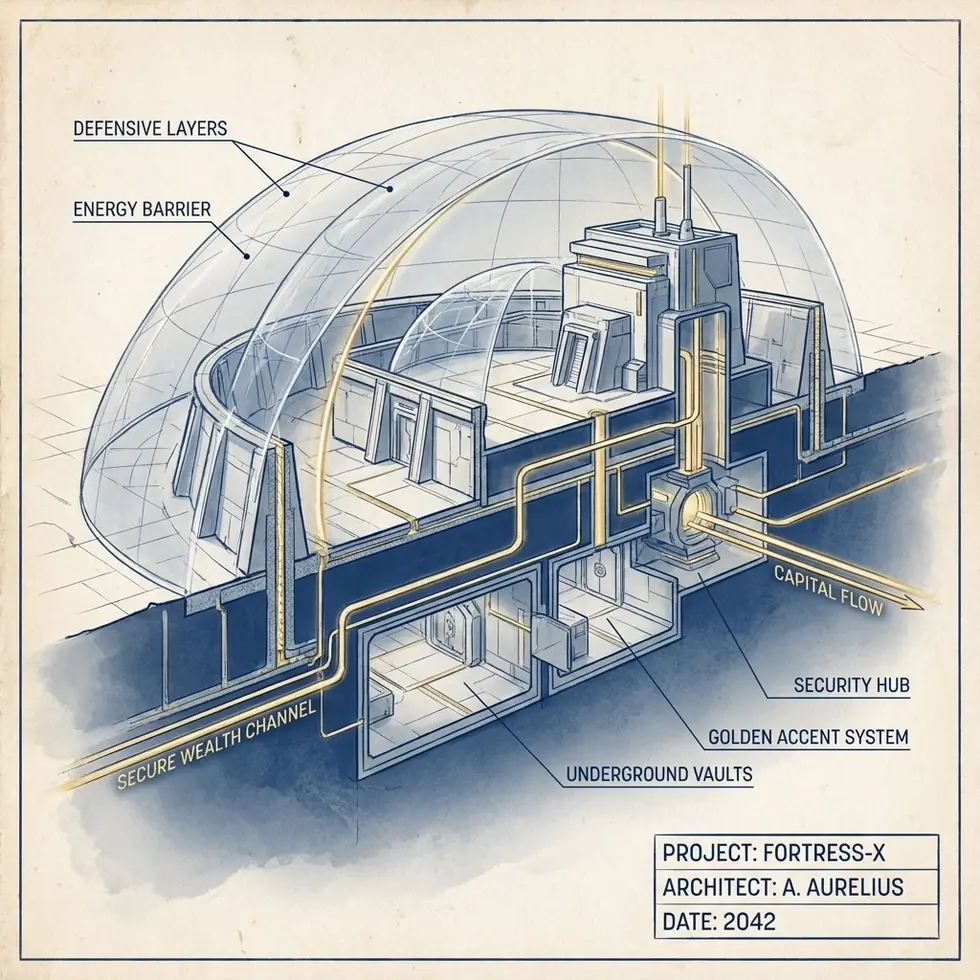
Phase 3: Fortress-Grade Architecture Design
Based on what we uncover, we design comprehensive solutions using our core frameworks:
FortressWall™ Strategy: Multi-layered protection combining domestic asset protection, offshore structures, and family governance protocols.
Legacy Protection Trusts: Dynasty structures designed to survive multi-generational family dynamics and external threats.
PPLI Integration: Private placement life insurance for tax-efficient wealth transfer and creditor protection.
Cross-Border Risk Management: Proper structuring for families with international exposure or mobility.
Why Most Estate Plans Fail the Readiness Test
Assumption #1: Family Unity Will Persist
Traditional planning assumes beneficiaries will cooperate, make rational decisions, and prioritize family legacy over personal gain. The SRB designs around human nature instead of human hopes.
Assumption #2: Legal Documents Equal Protection
Having a trust doesn't mean you're protected. Funding matters. Governance matters. The quality of drafting and ongoing administration determines whether structures survive legal challenges.
Assumption #3: One-Size-Fits-All Solutions Work
Cookie-cutter trusts and generic LLC structures collapse under pressure. Ultra-high-net-worth families need custom architecture designed for their specific risk profile.
What the SRB Reveals About Your Current Plan
Beneficiary Vulnerability Points
Most trust distributions create immediate exposure to divorce courts, creditor claims, and poor financial decisions. The SRB identifies specific protection gaps and designs appropriate safeguards.
Succession Blind Spots
Business succession plans often assume the next generation wants to run the company. We design structures that work whether heirs are involved or not.
Tax Efficiency vs. Protection Trade-offs
Many structures optimize for tax savings while creating asset protection vulnerabilities. The SRB balances both objectives without compromising either.

International Exposure
Global families often have U.S. tax reporting obligations or foreign trust complications they don't understand. We identify and resolve these issues before they become IRS problems.
Beyond Traditional Planning: The Protection-First Approach
Protect the family first. Then protect the money.
The SRB operates on this core principle. Family dysfunction destroys more wealth than market crashes or tax policy changes. Our process prioritizes:
- Family Governance: Clear decision-making protocols and conflict resolution mechanisms
- Beneficiary Education: Preparing the next generation for wealth responsibility
- Structural Integrity: Architecture that survives legal challenges and family disputes
- Operational Excellence: Professional management and oversight systems
Timing Matters: Why Wait Is a Strategy That Fails
Most families schedule estate planning reviews after major life events, deaths, divorces, liquidity events. The SRB works differently. We identify vulnerabilities while you still have leverage to fix them.
Critical windows for SRB scheduling:
- Before business sale or IPO events
- During family transitions (deaths, marriages, divorces)
- When relocating between states or countries
- At regular intervals for ongoing optimization
The cost of prevention is always less than the cost of crisis management.
FAQ: Situation Readiness Briefing
Q: How is an SRB different from a regular estate plan review?
A: Traditional reviews focus on tax efficiency and document updates. The SRB stress-tests your plan against real-world failure scenarios and designs comprehensive protection strategies.
Q: How long does an SRB take?
A: Typically 4-6 weeks from initiation to final recommendations. Complex international or business succession situations may require additional time.
Q: What if my current plan is relatively new?
A: Even recent plans often have structural vulnerabilities. The SRB evaluates quality of implementation, not just document age.
Q: Do you work with my existing advisors?
A: Yes. We coordinate with your CPA, financial advisor, and other professionals to ensure integrated solutions.
Q: What's the investment for an SRB?
A: Investment varies based on complexity. We provide transparent pricing during initial consultation based on your specific situation.
Q: Can the SRB identify problems with offshore structures?
A: Absolutely. We have extensive experience with international trust complications and cross-border planning issues.
Schedule Your Situation Readiness Briefing
Your family's financial future depends on architecture that works under pressure. Don't wait for crisis to reveal the cracks in your current plan.
Schedule an SRB today. We'll identify the failure points and map the fortress-grade fix while you still have time to implement proper protection.
Contact the Law Office of James Burns: Schedule your confidential consultation and discover what your current plan isn't telling you.
Disclaimer: This content is for informational purposes only and does not constitute legal advice. Estate planning strategies should be customized based on individual circumstances and current law.
Intellectual Property Notice: Situation Readiness Briefing (SRB) and FortressWall™ are proprietary methodologies of the Law Office of James Burns.

Comments
There are no comments for this post. Be the first and Add your Comment below.
Leave a Comment