

Understanding the Appeal of PPLI for High-Net-Worth Individuals
For high-net-worth individuals, the pursuit of sophisticated wealth management tools never stops. Among the world's most powerful financial instruments, Private Placement Life Insurance (PPLI) stands apart — combining the protection of life insurance with the flexibility of global investment management, tax deferral, and asset protection.
This article explores how the global elite use PPLI to optimize their financial architecture across borders, minimize tax drag, and preserve family wealth for generations. Whether your goal is to shield assets, enhance privacy, or pass on legacy wealth, understanding the structure and global advantages of PPLI is essential.
What Is PPLI? A Bespoke Wealth Structure for the Elite
Defining Private Placement Life Insurance
Private Placement Life Insurance (PPLI) is a customized, institution-grade life insurance contract tailored for ultra-high-net-worth individuals and family offices.
It merges insurance and investment functions within a single compliant, flexible framework.
- Offers flexible, institution-level investment options unavailable in retail policies
- Customizable for complex estate and international structures
- Combines death benefit protection with tax-deferred investment growth
Core Structural Advantages
- Tax-deferred accumulation of income and gains
- Access to alternative assets (hedge funds, private equity, real estate, digital assets)
- Global privacy and creditor protection
Typical Policy Designs
PPLI is often established as a Variable Universal Life (VUL) or Variable Whole Life structure. Premiums are flexible, policyholders may choose from bespoke sub-accounts, and the death benefit can be optimized for estate or liquidity needs.
How the Global Elite Use PPLI for Tax Efficiency
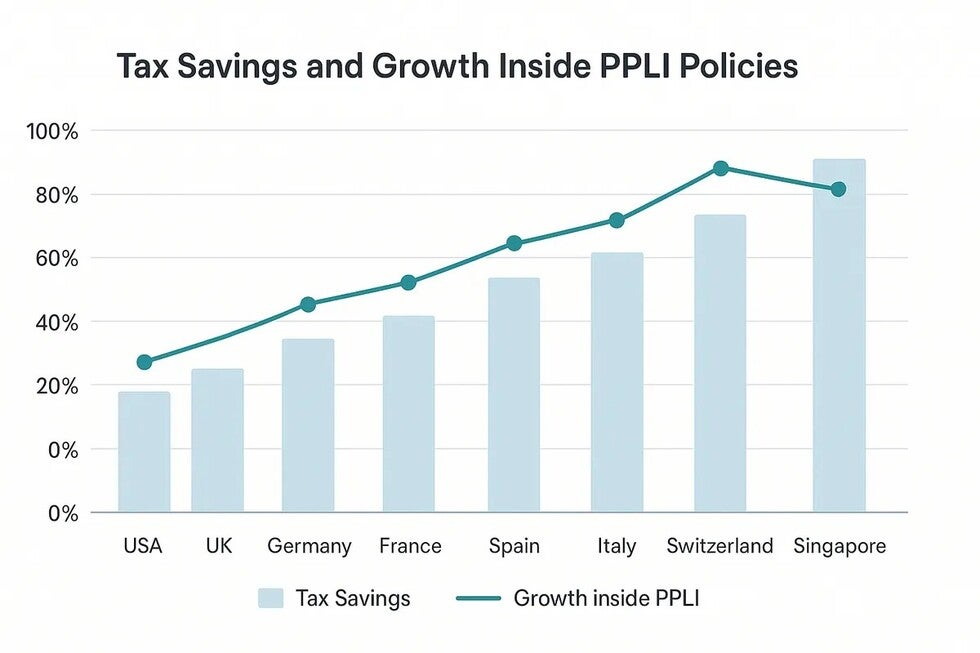
Global Tax Optimization
Inside a PPLI structure, investments grow tax-deferred, and upon death, benefits pass income-tax-free to beneficiaries.
In many jurisdictions, capital gains and ordinary income taxes are deferred for as long as assets remain inside the policy.
Cross-Border Tax Planning
For families or executives with assets across multiple countries, PPLI can unify tax treatment:
- Mitigates double taxation across borders
- Enables tax-efficient repatriation of funds
- Supports compliance under FATCA, CRS, and OECD standards
Leveraging Tax Treaties
A carefully domiciled policy can use bilateral tax treaties to:
- Reduce withholding taxes on dividends and interest
- Eliminate capital gains taxes upon transfer or liquidation
- Enhance intergenerational estate tax planning
Example: The European Entrepreneur
A European entrepreneur with U.S. and Asian investments structures a Bermuda PPLI policy to house global private equity holdings.
- Avoids U.S. capital gains exposure
- Gains treaty benefits between the EU and offshore jurisdictions
- Enables tax-neutral transfers to heirs
Asset Protection Strategies: Using PPLI as a Global Shield
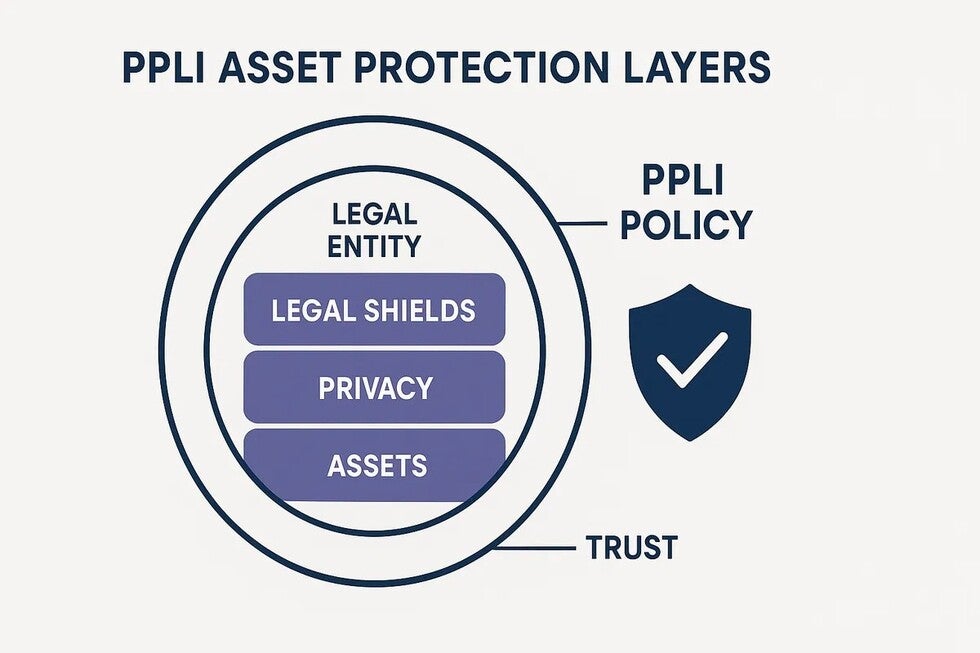
Shielding Assets from Creditors
Elite clients and family offices often use PPLI to insulate assets from future claims.
- Life insurance cash values are statutorily protected in many jurisdictions
- Proper structuring can exclude policy values from bankruptcy estates
- Ownership via irrevocable or dynasty trusts enhances asset separation
Privacy as a Defensive Tool
PPLI adds another layer of privacy:
- No public registries of holdings
- Minimal regulatory disclosure compared to trusts or funds
- Reduces exposure to financial targeting or litigation
Diversification and Control
Policyholders maintain strategic control while diversifying across asset classes:
- Real estate, private credit, or hedge strategies within one wrapper
- Dynamic reallocation without triggering taxable events
Example: A Global Family Office
A European-Asian family consolidates $200M in investments under a Luxembourg PPLI, gaining creditor protection, centralized oversight, and complete anonymity.
PPLI for Estate Planning and Multigenerational Wealth Transfer
Seamless Wealth Transfer
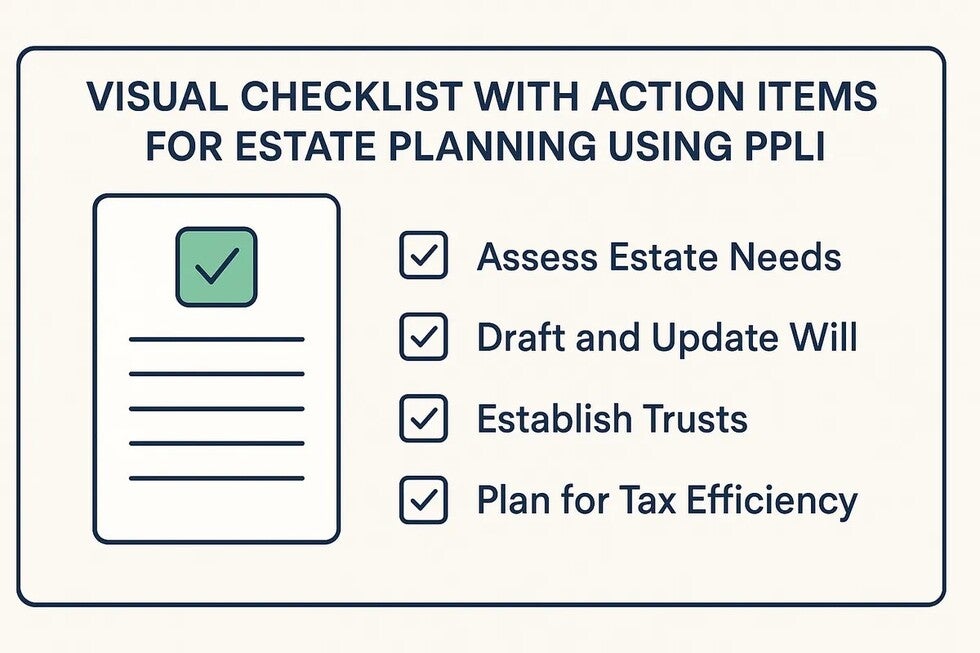
A PPLI structure simplifies the intergenerational transfer of wealth:
- Death benefits bypass probate
- Estate tax exposure can be reduced or neutralized
- Facilitates generation-skipping trust funding
Estate Structure Integration
- Policies owned by irrevocable life insurance trusts (ILITs) for control
- Flexibility in beneficiary designations
- Can fund charitable remainder trusts or buy-sell agreements
Example: Multigenerational Liquidity
A California family uses a South Dakota trust-owned PPLI to fund education trusts, business succession, and legacy ventures.
The policy's liquidity covers estate taxes without forced asset sales, preserving family governance.
Customization: Tailoring PPLI to Unique Financial Goals
Investment Customization
- Access to institutional-grade funds, hedge funds, and private credit
- Integration with existing family office strategies
- Periodic rebalancing inside the policy without triggering capital gains
Policy Design Flexibility
- Variable death benefit and premium structures
- Optional riders for long-term care, premium financing, or additional insureds
Integration with Trusts and Foundations
- Coordinate with dynasty trusts, PRPs, or charitable foundations
- Enable asset segregation between generations and jurisdictions
Example: The Tech Innovator
A technology founder integrates his PPLI with a Cayman LLC and South Dakota dynasty trust.
It funds both his family legacy plan and a charitable initiative, creating tax-free growth and lasting impact.
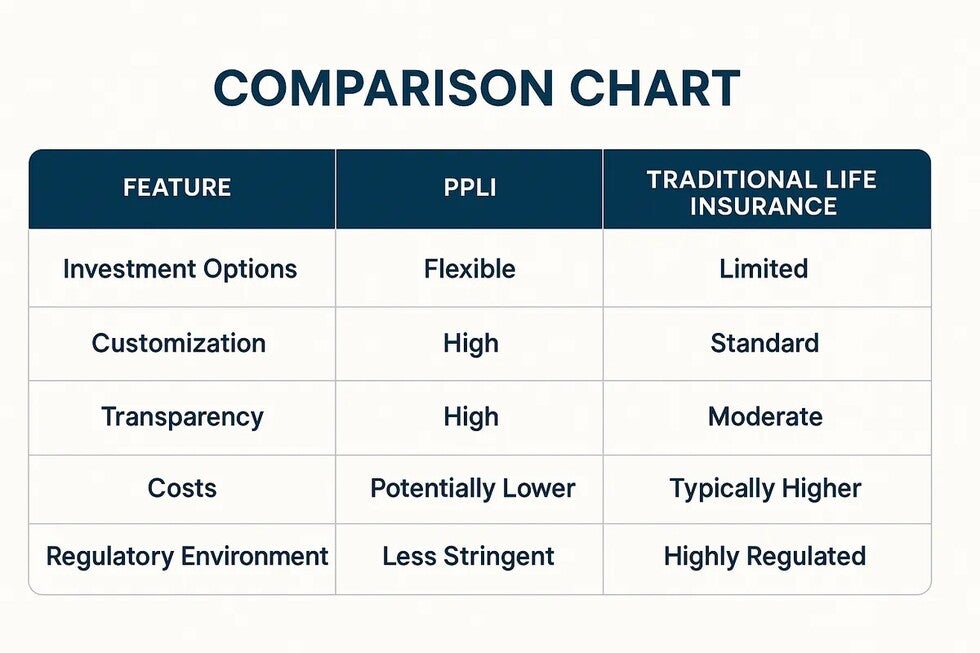
PPLI vs. Traditional Life Insurance: A Global Comparison
|
Feature |
PPLI |
Traditional Life Insurance |
|
Investment Options |
Hedge funds, private equity, real estate |
Limited to mutual fund subaccounts |
|
Tax Treatment |
Deferred growth; tax-free death benefit |
Limited deferral, less flexibility |
|
Privacy |
Minimal disclosure |
Regulated public filings possible |
|
Premium Threshold |
Typically $1M+ |
As low as $100K |
|
Complexity |
High—requires professionals |
Moderate |
Understanding the Appeal of PPLI for High-Net-Worth Individuals
For high-net-worth individuals, the pursuit of sophisticated wealth management tools never stops. Among the world's most powerful financial instruments, Private Placement Life Insurance (PPLI) stands apart — combining the protection of life insurance with the flexibility of global investment management, tax deferral, and asset protection.
This article explores how the global elite use PPLI to optimize their financial architecture across borders, minimize tax drag, and preserve family wealth for generations. Whether your goal is to shield assets, enhance privacy, or pass on legacy wealth, understanding the structure and global advantages of PPLI is essential.
What Is PPLI? A Bespoke Wealth Structure for the Elite
Defining Private Placement Life Insurance
Private Placement Life Insurance (PPLI) is a customized, institution-grade life insurance contract tailored for ultra-high-net-worth individuals and family offices.
It merges insurance and investment functions within a single compliant, flexible framework.
- Offers flexible, institution-level investment options unavailable in retail policies
- Customizable for complex estate and international structures
- Combines death benefit protection with tax-deferred investment growth
Core Structural Advantages
- Tax-deferred accumulation of income and gains
- Access to alternative assets (hedge funds, private equity, real estate, digital assets)
- Global privacy and creditor protection
Typical Policy Designs
PPLI is often established as a Variable Universal Life (VUL) or Variable Whole Life structure. Premiums are flexible, policyholders may choose from bespoke sub-accounts, and the death benefit can be optimized for estate or liquidity needs.
How the Global Elite Use PPLI for Tax Efficiency
Global Tax Optimization
Inside a PPLI structure, investments grow tax-deferred, and upon death, benefits pass income-tax-free to beneficiaries.
In many jurisdictions, capital gains and ordinary income taxes are deferred for as long as assets remain inside the policy.
Cross-Border Tax Planning
For families or executives with assets across multiple countries, PPLI can unify tax treatment:
- Mitigates double taxation across borders
- Enables tax-efficient repatriation of funds
- Supports compliance under FATCA, CRS, and OECD standards
Leveraging Tax Treaties
A carefully domiciled policy can use bilateral tax treaties to:
- Reduce withholding taxes on dividends and interest
- Eliminate capital gains taxes upon transfer or liquidation
- Enhance intergenerational estate tax planning
Example: The European Entrepreneur
A European entrepreneur with U.S. and Asian investments structures a Bermuda PPLI policy to house global private equity holdings.
- Avoids U.S. capital gains exposure
- Gains treaty benefits between the EU and offshore jurisdictions
- Enables tax-neutral transfers to heirs
Asset Protection Strategies: Using PPLI as a Global Shield
Shielding Assets from Creditors
Elite clients and family offices often use PPLI to insulate assets from future claims.
- Life insurance cash values are statutorily protected in many jurisdictions
- Proper structuring can exclude policy values from bankruptcy estates
- Ownership via irrevocable or dynasty trusts enhances asset separation
Privacy as a Defensive Tool
PPLI adds another layer of privacy:
- No public registries of holdings
- Minimal regulatory disclosure compared to trusts or funds
- Reduces exposure to financial targeting or litigation
Diversification and Control
Policyholders maintain strategic control while diversifying across asset classes:
- Real estate, private credit, or hedge strategies within one wrapper
- Dynamic reallocation without triggering taxable events
Example: A Global Family Office
A European-Asian family consolidates $200M in investments under a Luxembourg PPLI, gaining creditor protection, centralized oversight, and complete anonymity.
PPLI for Estate Planning and Multigenerational Wealth Transfer
Seamless Wealth Transfer
A PPLI structure simplifies the intergenerational transfer of wealth:
- Death benefits bypass probate
- Estate tax exposure can be reduced or neutralized
- Facilitates generation-skipping trust funding
Estate Structure Integration
- Policies owned by irrevocable life insurance trusts (ILITs) for control
- Flexibility in beneficiary designations
- Can fund charitable remainder trusts or buy-sell agreements
Example: Multigenerational Liquidity
A California family uses a South Dakota trust-owned PPLI to fund education trusts, business succession, and legacy ventures.
The policy's liquidity covers estate taxes without forced asset sales, preserving family governance.
Customization: Tailoring PPLI to Unique Financial Goals
Investment Customization
- Access to institutional-grade funds, hedge funds, and private credit
- Integration with existing family office strategies
- Periodic rebalancing inside the policy without triggering capital gains
Policy Design Flexibility
- Variable death benefit and premium structures
- Optional riders for long-term care, premium financing, or additional insureds
Integration with Trusts and Foundations
- Coordinate with dynasty trusts, PRPs, or charitable foundations
- Enable asset segregation between generations and jurisdictions
Example: The Tech Innovator
A technology founder integrates his PPLI with a Cayman LLC and South Dakota dynasty trust.
It funds both his family legacy plan and a charitable initiative, creating tax-free growth and lasting impact.
Case Studies: Real-World PPLI Success Stories
Case 1: International Business Magnate
Used a Cayman-domiciled PPLI to integrate 12 global investments under one tax-neutral umbrella, saving millions in annual tax leakage.
Case 2: Asian Family Office
Leveraged a Singapore-based PPLI to streamline cross-border inheritance for five jurisdictions, eliminating probate complexity.
Case 3: European Philanthropist
Created a Bermuda PPLI to house charitable foundation endowments, generating long-term tax-free growth for philanthropic use.
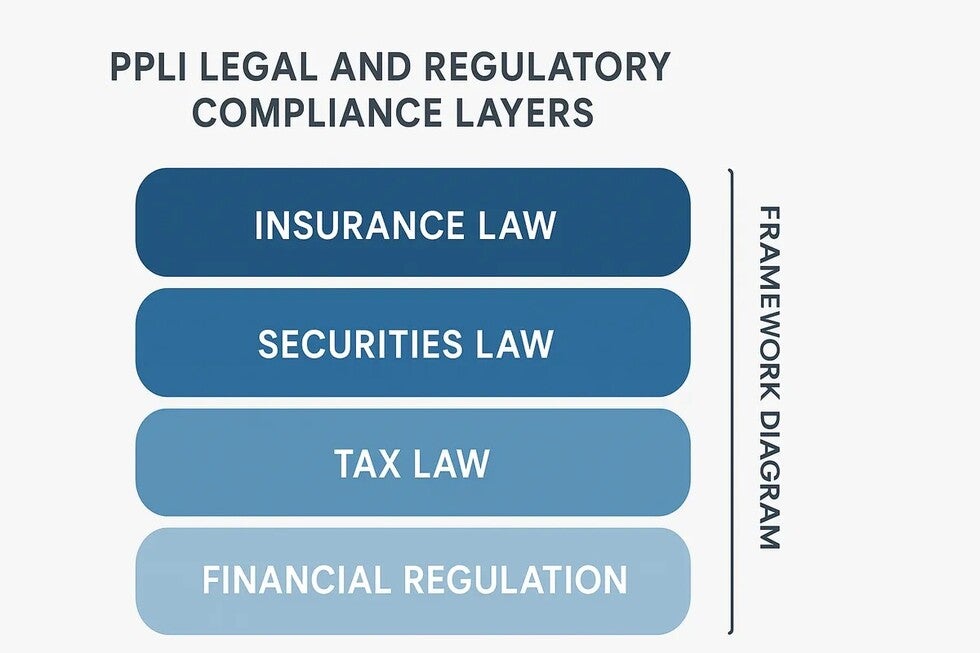
Legal and Regulatory Considerations
Jurisdiction Selection
Choice of domicile is strategic:
- Bermuda: flexible, recognized by the IRS under Rev. Rul. 2004-75
- Luxembourg: strong EU treaty network
- Ireland or Cayman: favorable for fund-linked investments
Compliance with FATCA and CRS
Modern PPLI programs are fully compliant while maintaining privacy.
- Reportable to regulators, but not publicly visible
- Transparent structures prevent reputational risk
AML and KYC Requirements
Every insurer conducts rigorous onboarding to verify source of funds and ownership chains — ensuring integrity in wealth preservation.
The Advisor's Role in PPLI Execution
Expertise and Coordination
PPLI planning requires an interdisciplinary team:
- Legal counsel (estate and tax)
- Investment manager
- Licensed insurance specialist
Client Education
Advisors must clarify mechanics, risks, and costs, ensuring the client understands the difference between policy wrapper and underlying assets.
Ongoing Management
- Annual policy review and performance alignment
- Adjusting for changes in tax law or residency

Emerging Trends and the Future of PPLI
- Blockchain and AI are streamlining policy administration and KYC transparency.
- New asset classes, including ESG, crypto, and impact funds, are expanding policy investment menus.
- Jurisdictional modernization, such as Bermuda's sandbox rules, is making global PPLI even more robust.
- Demand is accelerating in Asia, the Middle East, and Latin America as wealth globalizes.

FAQ: How the Elite Use Private Placement Life Insurance (PPLI) Worldwide
1. What is Private Placement Life Insurance (PPLI)?
PPLI is a highly customized life insurance contract designed for ultra-high-net-worth individuals. It combines global investment management, tax deferral, and estate planning benefits under a single, compliant structure.
2. How does PPLI offer tax efficiency?
Investments grow tax-deferred inside the policy, and death benefits are generally paid income-tax-free. This structure minimizes capital gains, estate taxes, and ongoing tax drag.
3. Can PPLI protect assets from creditors?
Yes. In many jurisdictions, PPLI enjoys statutory creditor protection. When combined with trusts or offshore entities, it can create a formidable legal shield against claims and litigation.
4. Is PPLI suitable for cross-border wealth management?
Absolutely. PPLI is often used to harmonize tax treatment across multiple countries, allowing global families to consolidate wealth efficiently while remaining compliant with FATCA, CRS, and OECD rules.
5. How does PPLI compare to traditional life insurance?
Traditional life insurance offers limited investment options and modest tax advantages. PPLI, by contrast, allows investment in hedge funds, private equity, and real estate — all within a tax-efficient wrapper.
6. What kinds of investments can be held within a PPLI policy?
Policies can include alternative investments such as private equity, venture capital, hedge funds, ESG/impact assets, and even certain cryptocurrencies, subject to insurer approval.
7. Are there minimum investment requirements?
Yes. Minimum premiums typically start around $1 million, making PPLI best suited for high- and ultra-high-net-worth clients seeking long-term, multi-generational wealth planning.
8. Which jurisdictions are best for domiciling PPLI policies?
Common choices include Bermuda, Luxembourg, the Cayman Islands, and Ireland — each offering favorable tax treaties, creditor protection, and strong regulatory oversight.
9. How does PPLI assist in estate planning?
PPLI can fund estate liquidity, bypass probate, reduce estate tax exposure, and facilitate seamless intergenerational wealth transfer via trust integration.
10. Can PPLI be owned by a trust?
Yes. Trust-owned PPLI (often via an ILIT or dynasty trust) enhances privacy, control, and creditor protection, while coordinating with family governance objectives.
11. Is PPLI transparent to tax authorities?
Yes. While private, compliant PPLI structures meet global transparency standards, including FATCA and CRS reporting requirements — ensuring lawful confidentiality.
12. What are the costs involved?
Costs include insurance charges, investment management, and administrative fees. Though higher than retail policies, the tax and asset-protection benefits often justify the expense.
13. Can PPLI policies be adjusted after issuance?
Most policies allow flexible premium payments, updated investment strategies, and adjustable death benefits to reflect changing financial goals.
14. How do advisors assist with PPLI?
PPLI requires collaboration between legal, tax, and investment professionals to ensure regulatory compliance and optimal structuring. Advisors coordinate all elements to achieve the client's objectives.
15. What risks are associated with PPLI?
Risks include investment volatility, jurisdictional tax changes, and complexity of administration. Proper legal oversight minimizes these concerns.
16. Can PPLI be used for philanthropy?
Yes. PPLI can fund charitable remainder trusts, donor-advised funds, or private foundations to support long-term philanthropic legacies.
17. Is PPLI available to non-U.S. residents?
Yes. It is widely used by international families, especially in Asia, Europe, and Latin America, for global wealth and estate planning.
18. How are withdrawals or surrenders treated?
Withdrawals may be taxable depending on jurisdiction, while policy loans often allow liquidity without triggering immediate tax consequences.
19. What role do insurance companies play?
They underwrite and administer the policy, working with asset managers and custodians to ensure investment compliance and performance alignment.
20. Are there emerging trends in PPLI?
Yes — including blockchain record-keeping, AI-driven portfolio management, ESG investing, and demand from emerging markets like Singapore and Dubai.
21. How does PPLI support privacy in wealth management?
Unlike public investment vehicles, PPLI holdings are not disclosed in registries, offering discretion and insulation from public scrutiny.
22. Can PPLI reduce global estate taxes?
Yes. Through careful jurisdictional design and treaty use, PPLI can significantly reduce or eliminate estate and inheritance tax exposure.
23. What documentation is needed to set up PPLI?
Typically, proof of identity, source of funds, investment objectives, and legal entity documentation (trusts, LLCs, etc.) are required for compliance.
24. Is PPLI right for every high-net-worth individual?
It depends on scale and objectives. PPLI is most effective for clients with $10M+ in net worth seeking privacy, control, and tax efficiency.
25. How does PPLI integrate with other planning tools?
It complements dynasty trusts, foundations, private retirement plans, and offshore structures, creating a unified wealth-preservation system.
26. What liquidity options exist?
Policy loans and partial withdrawals allow access to liquidity while maintaining the policy's tax-deferred status.
27. Can PPLI benefits pass directly to heirs?
Yes. Death benefits are typically paid directly to named beneficiaries, bypassing probate and preserving confidentiality.
28. Are there restrictions on investment types?
Yes — depending on the insurer and jurisdiction, but the range is significantly broader than traditional policies.
29. How important is jurisdiction selection?
Critical. The choice of domicile affects tax efficiency, asset protection, and compliance. Jurisdictional mistakes can undermine benefits.
30. What should clients consider before establishing a PPLI?
Assess total net worth, desired jurisdiction, investment goals, estate complexity, and professional team readiness before proceeding.
Conclusion: Why PPLI Is the Modern Iron Dome of Global Wealth
Private Placement Life Insurance represents the pinnacle of wealth protection, tax optimization, and legacy design. It fuses the disciplines of tax law, estate planning, and institutional investment management into one structure — one that the ultra-wealthy have quietly used for decades.
If you seek privacy, tax control, and permanence of wealth, the strategic integration of a Bermuda or Luxembourg PPLI policy may be your most powerful next move.
Take the Next Step
The Law Office of James Burns helps affluent families and global entrepreneurs design, structure, and implement custom PPLI solutions integrated with California Private Retirement Plans, dynasty trusts, and international wealth structures.
Schedule your confidential consultation at www.jamesburnslaw.com/contact-us
Legal Disclaimer
This article is for educational purposes only and does not constitute legal, tax, or investment advice. Readers should consult qualified professionals before acting on any strategy discussed herein. Results may vary depending on individual circumstances and jurisdictional laws.
Intellectual Property Notice
© 2025 Law Office of James G. Burns, Esq. All rights reserved.
“FortressWall™” and related frameworks are proprietary to the Law Office of James Burns. No portion of this article may be reproduced or distributed without express written consent.

Comments
There are no comments for this post. Be the first and Add your Comment below.
Leave a Comment