
Your next planning stage should address the most consequential unresolved problem in your family's finances. A more elaborate structure is useful only when it fits that problem and can be operated properly. The Wealth Rocket is a way to organize those decisions: establish the foundation, evaluate protection and transfer exposure, then consider advanced preservation strategies when the facts warrant them.
A couple can have substantial assets and an unfinished foundation. Another family may have a sound trust but a business guarantee that deserves immediate attention. A third may need coordinated advice before acquiring property abroad. Net worth helps frame the review. It does not, by itself, tell you which stage comes next.
For Orange County and Aliso Viejo families, the question is practical: what would become difficult if someone could not act tomorrow, a business transition accelerated or a family member needed access to money? Begin there. Risk Exposure Mapping turns those concerns into an organized set of facts before document selection begins.

Start With the Life the Plan Must Support
Describe what the family needs the wealth to do. A surviving spouse may need dependable income and a manageable home. An adult child may need carefully administered support. A business owner may want to reduce working hours without forcing a rushed sale. Parents may want children in different countries to inherit without conflicting instructions.
Put those objectives beside the current facts. List the major assets, legal owners, debt, beneficiaries, people with authority and the institutions involved. Separate money available now from a hoped-for sale or an expected inheritance. Identify where one person's memory is doing work that should be supported by a record.
This first inventory is for diagnosis. It is not an instruction to retitle property, move an account or change a beneficiary. Those actions can have consequences that need individual review. A useful inventory makes the professional conversation more precise; it does not replace it.
Stage One: Establish a Foundation Someone Else Can Use
The foundation connects the family's wishes to ownership, authority and implementation. A signed document is part of that work. The review also asks whether the right assets and institutions have been brought into the plan and whether the intended successor can understand what to do.
For each important asset, identify who owns it today, who can act during incapacity and what is expected to happen after death. A trust, an account registration and a beneficiary designation may perform different functions. Do not assume that putting them in the same folder makes them agree.
Health-care planning deserves a separate conversation. The California Attorney General's advance-care guidance recommends discussing wishes, designating someone to carry them out and keeping signed instructions accessible to the appropriate people. Financial authority should not be treated as a substitute for health-care instructions.
Test the practical side. Does the family know where the current signed documents are? Is there a current contact list? Has the person selected for a role agreed to discuss it? Are there records showing that requested account or ownership changes were actually completed? An unanswered question belongs on the work list.
A foundational review may be the right next stage even for a wealthy family. Adding an advanced arrangement while basic ownership and successor authority remain unclear can leave the people involved with more to administer and the same unresolved problem.
Stage Two: Examine the Exposures Around What You Own
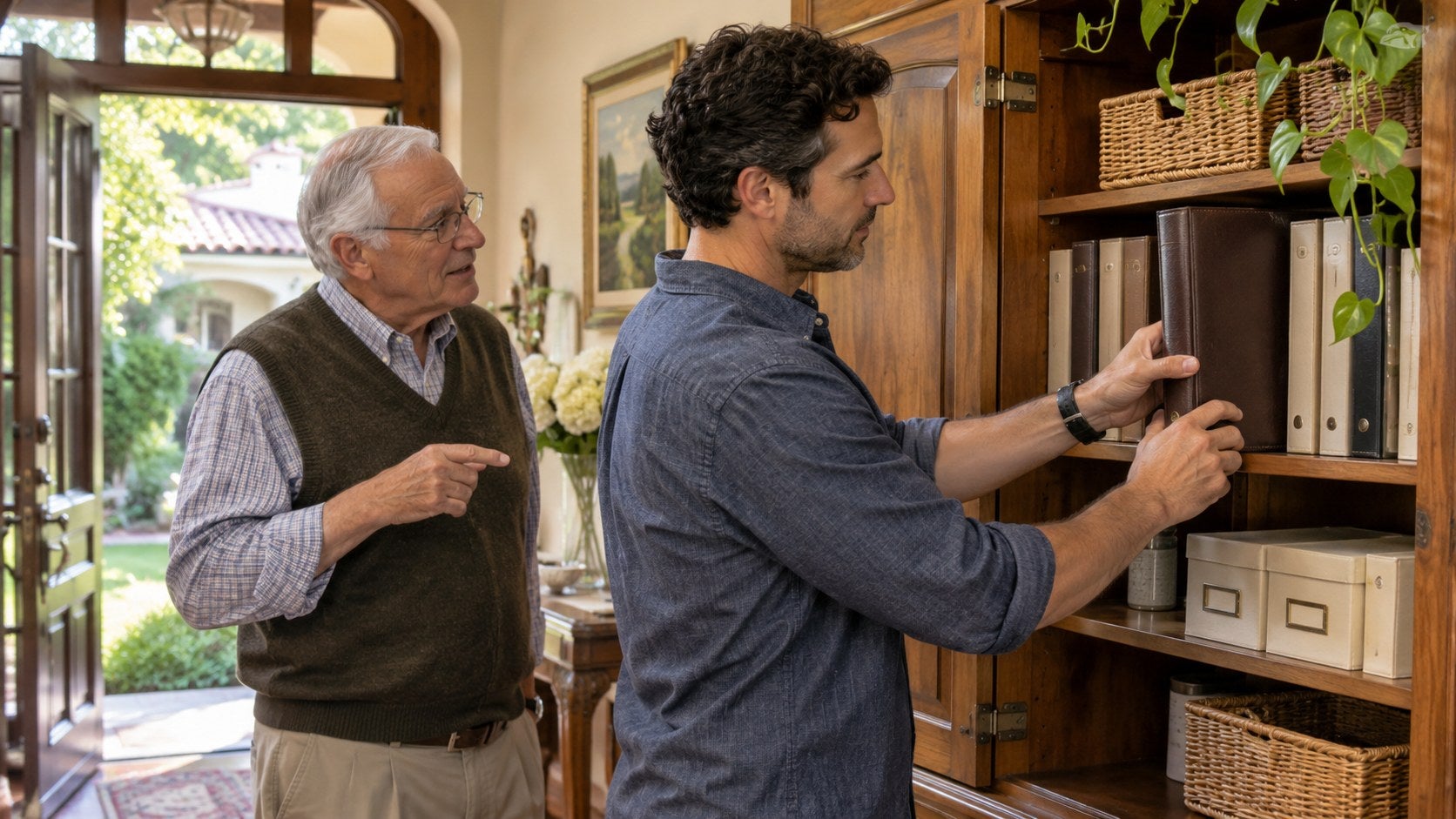
Once the foundation is understood, examine the liabilities and transitions that surround the assets. Business guarantees, concentrated property, ownership agreements, family obligations and potential transfer taxes deserve distinct treatment. The existence of a revocable trust does not establish that every exposure has been addressed.
Start with the actual documents and chronology. Who signed the guarantee? Which entity owns the property? What do the operating agreement and financing papers require? Is there an existing claim, demand or unresolved dispute? Tell counsel about that history before considering a transfer.
Asset-protection planning requires analysis of lawful purpose, timing, ownership and applicable restrictions. No structure should be presented as a cure for a developing claim. Our office does not handle litigation, and a proposed planning engagement should not be confused with representation in an existing dispute.
Estate-tax exposure is another question. It depends on the applicable rules and the family's circumstances. A tax threshold does not measure whether a spouse can pay the mortgage, whether a business has buyout funding or whether a successor can gain access to records. Keep those questions visible even when a particular tax is not expected.
The right recommendation may be modest: clarify an agreement, confirm insurance with the appropriate professional, preserve records or review authority. It may require advanced work. Complexity is a cost to justify, rather than a sign that the family has arrived.
Stage Three: Evaluate Preservation With the Costs Included
Advanced wealth-preservation work considers whether a strategy offers a useful benefit after costs, restrictions, tax treatment, liquidity needs and ongoing administration are understood. A potential reduction in tax drag or a better transfer arrangement can matter. It must be evaluated against the real alternatives.
Ask for the assumptions in writing. What must remain true for the approach to work as intended? Which assets are suitable? Who will administer it? What happens if the family needs cash earlier, moves, changes advisers or no longer wants the arrangement? The exit deserves attention before the entrance.
Insurance-based planning, specialized trusts and international structures involve different legal and tax questions. They should not be grouped under a promise of tax-free wealth or guaranteed protection. Product qualification, ownership, expenses, investment limitations, distributions and reporting may each require specialist analysis.
Families with international ties need qualified advisers in the relevant jurisdictions. A U.S. plan may leave local title, succession or tax issues unresolved abroad. The firm's Cross-Border Wealth Systems framework organizes that coordination; qualified local counsel determines foreign-law and citizenship-eligibility questions.
Not every family needs this stage. A well-supported decision to defer an unsuitable strategy can be a valuable planning result. The objective is a workable family plan, not ownership of the greatest number of entities or policies.
Choose the Next Stage With a Decision Sheet
Use a short sheet to distinguish an observed fact from a concern and a proposed action. Keep the supporting documents available. If ownership is uncertain, write “confirm ownership” rather than entering the answer the family hopes is correct.
| Question | Evidence to gather | Useful next discussion |
|---|---|---|
|
Can someone act if I cannot? |
Current signed documents and institution requirements |
Foundation and implementation review |
|
Do ownership and transfer instructions agree? |
Deeds, registrations, beneficiary records and agreements |
Asset-specific coordination |
|
What obligations sit outside the apparent structure? |
Guarantees, debt, demands and insurance information |
Paid exposure and protection review |
|
Will a transition create a cash problem? |
Household needs, business terms and available reserves |
Liquidity and succession planning |
|
Would advanced planning justify its cost? |
Objectives, assumptions, alternatives and administration estimates |
Paid specialist feasibility review |
Assign each open question to an appropriate professional and record what must be delivered for that person to answer it. “Talk to the accountant” is difficult to track. “Provide the ownership record and ask which tax questions a proposed transfer raises” is a defined task.
Sequence decisions by their dependencies. If the plan depends on an asset being owned by a particular person or entity, confirm that fact before modeling a transfer. If a recommendation depends on a spouse's income needs, agree on the assumptions before committing funds.

A Hypothetical Family That Returns to the Foundation
Imagine a fictional Orange County couple who own a home, a business interest and investment accounts. They have heard about advanced preservation strategies and want to discuss them. Their signed trust is several years old, and one spouse has handled nearly every financial task.
The initial inventory reveals unfinished work. They cannot locate current beneficiary confirmations. The business agreement names a person whose role has changed. The other spouse knows the institutions but not the account contacts. They also expect business-sale proceeds that have not yet been negotiated.
They begin by gathering records and reviewing authority. Counsel examines the estate documents and business materials within an agreed scope. The couple confirms their household needs and identifies which anticipated resources remain uncertain. Any account changes follow appropriate advice and institutional procedures.
Only then do they ask whether advanced work is suitable. This example describes a decision process, not a client result or a conclusion that these fictional people qualify for a particular strategy. Another family's facts could require a different sequence or prompt attention to a specific exposure first.
Require Proof That the Work Was Implemented
A recommendation, a signed authorization and a completed change are different events. Keep the evidence that connects them. A letter asking an institution to make a change is not the same as a confirmation showing the intended result.
Decide who is responsible for follow-up. Some tasks belong to the lawyer, some to another adviser and some to the client, according to the engagement. Do not leave responsibility implicit because everyone attended the same meeting. Record exceptions and unanswered requests.
Establish review triggers that fit the family: a move, marriage, death, business sale, changed beneficiary circumstances, proposed borrowing or a new obligation. Reviewing every document without a question can become an expensive ritual. A defined trigger tells the team what needs to be examined and why.
The family-conversation follow-through guide helps organize task ownership after a discussion. For a retirement arrangement, the PRP purpose and eligibility review shows why the operating records matter. Neither substitutes for individual advice.
Arrange the Review That Fits the Actual Question
A qualifying new foundational estate plan or full restatement may begin with a no-charge Situation Readiness Briefing, with the required Risk Exposure Mapping Form completed beforehand. Bring current documents and the questions that the family needs answered.
Asset protection, PRP, business succession, PPLI and other advanced-planning consultations are paid, billable engagements. Call (949) 305-8642 to establish fit, scope and fees in advance. A foundational briefing does not include a free advanced-planning consultation or an open-ended review of another professional's work.
Law Office of James Burns
6B Liberty, Suite 130
Aliso Viejo, CA 92656
Frequently Asked Questions
Is the Wealth Rocket a legal or investment product?
No. It is the firm's planning framework for organizing foundational decisions, exposure review and advanced preservation analysis. Each actual service or strategy requires an appropriate engagement and individual advice.
Does a larger estate always need a more advanced structure?
No. Asset value is one fact. Ownership, family needs, liabilities, liquidity, jurisdictions and administrative capacity also matter. An unfinished foundation may deserve attention before an additional structure.
Can I skip the foundation if I already have a trust?
The existence of a trust does not answer whether it matches current ownership, beneficiary records, successor roles and family circumstances. Have the actual materials reviewed before assuming the foundational work is complete.
Should I move assets before requesting a protection review?
Do not treat an article as a transfer instruction. Provide qualified counsel with the ownership records, obligations, claim history and proposed action before changing title or moving money.
What should a family bring to its next planning discussion?
Bring current signed estate documents, an asset-and-debt list, ownership and beneficiary records, relevant business agreements, household liquidity needs and a short list of unresolved decisions. Ask the office how to deliver sensitive records securely.
Are advanced-planning consultations included in the SRB?
No. The no-charge route applies only to qualifying foundational new-plan or full-restatement briefings with the required form. Asset protection, PRP, business succession and other advanced consultations are separately paid engagements.
Sources and Further Reading
Source review: November 29, 2026. The California Attorney General's advance-care guidance supports the discussion of health-care wishes, designated decision-makers and accessible records. The firm's services and Wealth Rocket explanation describe this planning framework, rather than a statutory classification. This article does not state tax thresholds, certify eligibility or recommend a particular financial product.
Disclaimer
General educational information, not legal, tax, financial or investment advice. Appropriate planning depends on individual circumstances and applicable law. Obtain qualified advice before changing ownership, beneficiaries, funding or legal instructions. No result or protection is guaranteed, and reading this article does not create an attorney-client relationship.
IP Disclosure
© 2026 Law Office of James Burns. Original editorial content. Wealth Rocket describes the firm's planning framework. The hypothetical and AI-assisted conceptual illustrations depict fictional people and events, not clients or documented results. Referenced government material belongs to its respective owner.

Comments
There are no comments for this post. Be the first and Add your Comment below.
Leave a Comment