

The Biggest Mistake Wealthy Families Make: Treating Estate Planning Like Office Supplies
If you call an estate planning lawyer and ask, “How much for a trust?” you are not asking a planning question—you are asking a purchasing question.
And that category error is how affluent families lose seven figures: not because they lacked documents, but because they never built the strategy that tells the documents what to do.
On your website, “Estate Planning” isn't paperwork. It is wealth architecture—a coordinated system that addresses taxes, lawsuits, California-specific property traps, and family-control risks in one design. James Burns Law+1
Documents Are Tools. Strategy Is the System.
A trust is like an architectural blueprint. It becomes valuable only after you answer:
-
What are we building? (a family legacy system, a business succession system, an asset protection system, or all three)
-
What are the threat models? (creditors, divorces, audits, reassessment, incapacity, tax law shifts)
-
Who must control what—and when? (while alive, during incapacity, after death, across generations)
A “trust package” is never the product. The product is the outcome: preserved control, reduced loss, and a plan that still works under pressure.
This is why your firm begins with a diagnostic: the Situation Readiness Briefing (SRB)—a stress-test and mapping process that identifies failure points before implementation. James Burns Law+2James Burns Law+2
The Hidden Trap: A “Revocable Trust” Does Not Mean “Protected”
Most people assume: “I have a trust, so I'm protected.”
In California, that assumption can be catastrophically wrong—depending on what the trust actually is.
Definition: Revocable Living Trust (what it is—and what it is not)
A revocable living trust is a trust you can change or revoke during your lifetime. It is typically used to:
-
avoid probate,
-
organize distribution instructions,
-
manage assets during incapacity.
But it is not designed to shield your assets from your own creditors while you retain the power to revoke it. California law makes that point explicit. James Burns Law
If your goal is wealth defense (lawsuit protection, divorce insulation, multi-generational controls), you need a different architecture—often involving irrevocable planning layers, entity design, and/or statutory protections.
What “Price Shopping” Actually Costs (3 fast examples)
Example 1: The “Cheap Trust” vs. the FTB reality (illustrative)
A tech executive picks the lowest quote for a “standard trust package.” Two years later, a California residency position gets questioned (travel, home use, banking ties, licensing, etc.). California evaluates residency using “closest connections” style factors and documentation patterns—not your trust binder. State of California Franchise Tax Board+1
Result: The planning failed because the exposure was never mapped.
Example 2: Prop 19 property-tax reassessment shock (illustrative)
A family with a coastal California residence assumes “it all transfers in trust.” Prop 19 narrowed the parent-child exclusion rules and imposes occupancy/qualification requirements for certain transfers of a principal residence; rentals generally do not qualify. California State Board of Equalization
Result: Heirs inherit the house and an avoidable tax escalation because the plan wasn't engineered around the property-tax rules.
Example 3: The “estate plan” that ignores the business sale (illustrative)
A founder sells a company and discovers too late that the plan never considered:
-
QSBS positioning (where applicable), Legal Information Institute
-
installment method / deferral mechanics (where appropriate), Wikipedia+1
-
entity sequencing, timing, and governance controls.
Result: the “estate plan” is complete, but the wealth outcome is damaged.
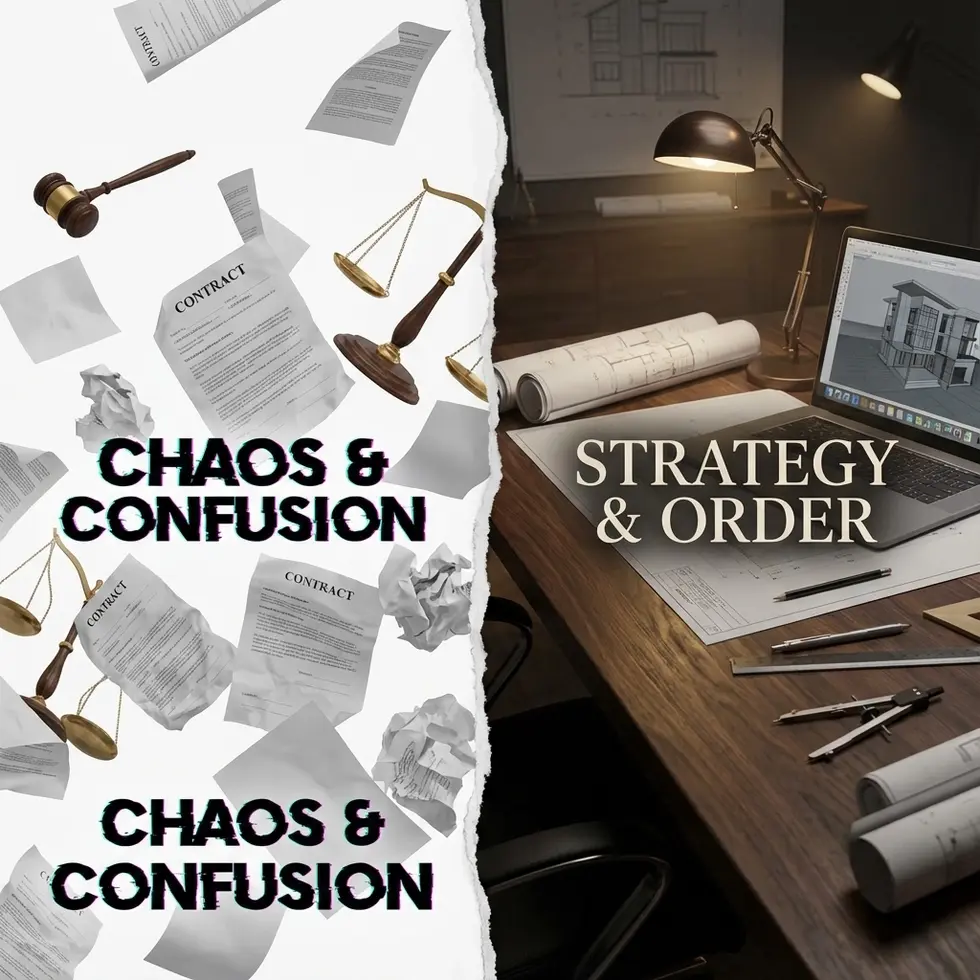
The Strategy-First Method: Exposure → Control → Outcomes
This is the planning logic your content should force prospects into.
1) Exposure Mapping: What can actually harm you?
Before drafting, map vulnerabilities across:
-
litigation and professional liability
-
California-specific property and tax traps (Prop 19, residency scrutiny, etc.) California State Board of Equalization+1
-
liquidity and forced-sale risk (settlement costs, estate equalization, taxes)
-
business continuity and succession
-
beneficiary risks (divorce, creditors, immaturity, addiction)
This is where your Asset Protection and Tax Planning pages become the natural “next click.” James Burns Law+1
2) Control Architecture: Who decides what, when?
Control is not “who gets the money.” Control is:
-
who manages decisions during incapacity,
-
who controls distributions and under what standards,
-
who can replace trustees and advisors,
-
what happens when family members conflict.
3) Outcome Engineering: Define success in measurable terms
Sophisticated families stop using vague goals (“avoid probate”) and define outcomes such as:
-
quantified tax drag reduction over 10 years,
-
defined asset protection targets (who/what threats),
-
succession milestones (and “if I'm incapacitated tomorrow” contingency),
-
governance rules that survive family pressure.
Only after those are defined do you select tools (trusts, entities, PRPs, insurance structures, etc.).

Definitions (use these as “callout boxes” inside the post)
Spendthrift protection (plain English)
A spendthrift clause is trust language that restricts a beneficiary from assigning their interest and can limit creditor access to trust distributions—useful when beneficiaries face creditor/divorce exposure. James Burns Law+1
Important California nuance: if the person creating the trust is also a beneficiary (a “self-settled” scenario), spendthrift restrictions can be limited/defeated under California law—meaning “asset protection” requires careful structuring, not slogans. James Burns Law
California Private Retirement Plan (PRP / CPRP)
A California PRP is a retirement-focused plan designed to qualify for creditor protection under California exemption law (commonly discussed under CCP § 704.115). Proper structuring, intent, and maintenance matter. James Burns Law+1
PPLI (Private Placement Life Insurance)
PPLI is not “regular life insurance.” It is an insurance chassis that—if structured to qualify under federal tax rules—can offer tax-advantaged growth and tax-efficient wealth transfer. (PPLI also carries strict compliance constraints; it is not for everyone.) James Burns Law+2James Burns Law+2
Installment sale / IRC § 453 (high-level)
An installment sale is a sale where at least one payment is received after the year of sale; the installment method can spread recognition of gain over time (subject to complex rules and planning constraints). IRS+1
Proposition 19 (what wealthy families should hear in one sentence)
Prop 19 changed the intergenerational property-tax exclusions—especially impacting transfers of California real estate—so “we'll just put it in a trust” can be an expensive misunderstanding if occupancy/qualification requirements are not engineered into the plan. California State Board of Equalization
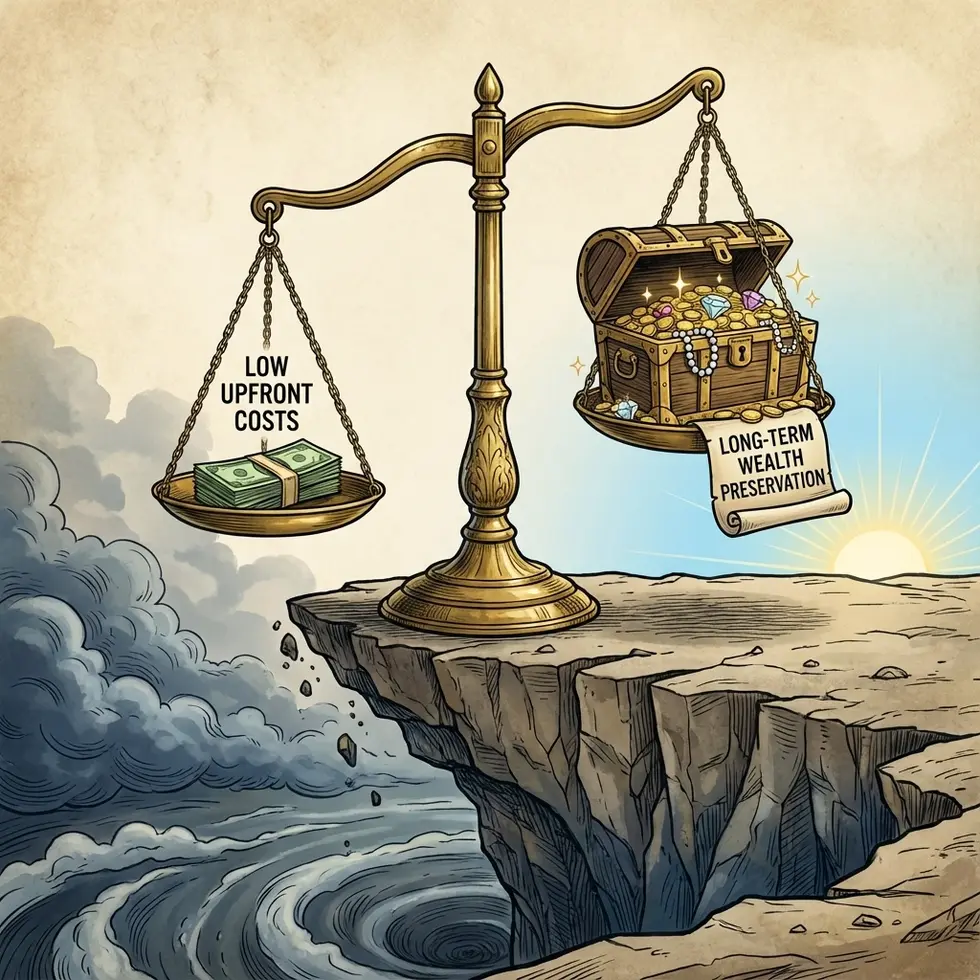
The Right Question Isn't “How Much for a Trust?”
It is:
-
What is my top 3 risk map? (tax, lawsuit, reassessment, governance, liquidity)
-
Where do I currently lose control under pressure?
-
What must be true in 10 years for this plan to be considered a win?
That is precisely why your intake should route serious prospects into the Situation Readiness Briefing, not a document quote. James Burns Law+1
When Documents Actually Matter
Documents become critical after strategy is clear:
- Precision Drafting: Custom language for unique family situations
- Tax Optimization: Specific provisions that trigger favorable treatment
- Control Mechanisms: Detailed governance structures and decision-making processes
- Protection Features: Sophisticated spendthrift and discretionary provisions
But these sophisticated features only work within strategic frameworks designed for specific families and specific goals.
The Strategic Partnership Model
We don't sell documents. We architect outcomes.
Our process starts with strategic discovery: mapping exposures, designing control, and defining success metrics. Documents emerge from this strategic foundation: custom-built tools for specific situations.
This approach costs more upfront because strategy takes time and expertise. But it saves exponentially more because it works when tested by real-world threats.
Related Resources / Read More
- Core services: Estate Planning, Asset Protection, Private Retirement Plans & PPLI, Blog & Resource Archive
- Spendthrift trusts: Spendthrift Trust California vs. Regular Trust — Which Better Protects Your $10M+ Estate?
- Crypto custody and recovery risks: Most Crypto Millionaires are One Accident Away From Zero Recoverable Dollars
Sources Used
- IRS Publication 537 — Installment Sales: https://www.irs.gov/publications/p537
- IRC §1202 — Qualified Small Business Stock (via LII): https://www.law.cornell.edu/uscode/text/26/1202
- California State Board of Equalization — Proposition 19 overview: https://www.boe.ca.gov/prop19/
Call to Action (sales-forward, framework-forward)
If your estate plan was built as a document transaction, you do not yet know whether it will hold under stress.
The first step is a Situation Readiness Briefing (SRB)—a structured diagnostic that maps exposure, control gaps, and optimization opportunities, then produces a fortress-grade implementation plan across estate planning, asset protection, and tax strategy. James Burns Law+2James Burns Law+2
FAQ
Why do some firms charge far less?
Because they sell standardized drafting. Strategy requires diagnostic work, sequencing, and integration across risks.
How do I know if I need strategy-first planning?
If you have business interests, California real estate, material tax exposure, liability exposure, cross-border assets, or family complexity, strategy-first planning is typically the difference between “documents” and “outcomes.” James Burns Law+1
What if I already have documents?
Then the question becomes: do they match your current exposures and goals? An SRB-style review often reveals fixable gaps and missed opportunities. James Burns Law
How often should this be updated?
Upon major life/asset changes, business exits, relocations, and major law changes; otherwise periodic reviews reduce drift and prevent silent failure.
Will you coordinate with my CPA and wealth manager?
Yes—integrated execution usually improves results (and reduces contradictory planning).
Disclaimer
This article provides general information only and does not constitute legal advice. Estate planning strategies must be customized for individual situations and current law. Consult qualified legal counsel for specific guidance.
© 2026 Law Office of James Burns. All rights reserved.

Comments
There are no comments for this post. Be the first and Add your Comment below.
Leave a Comment