
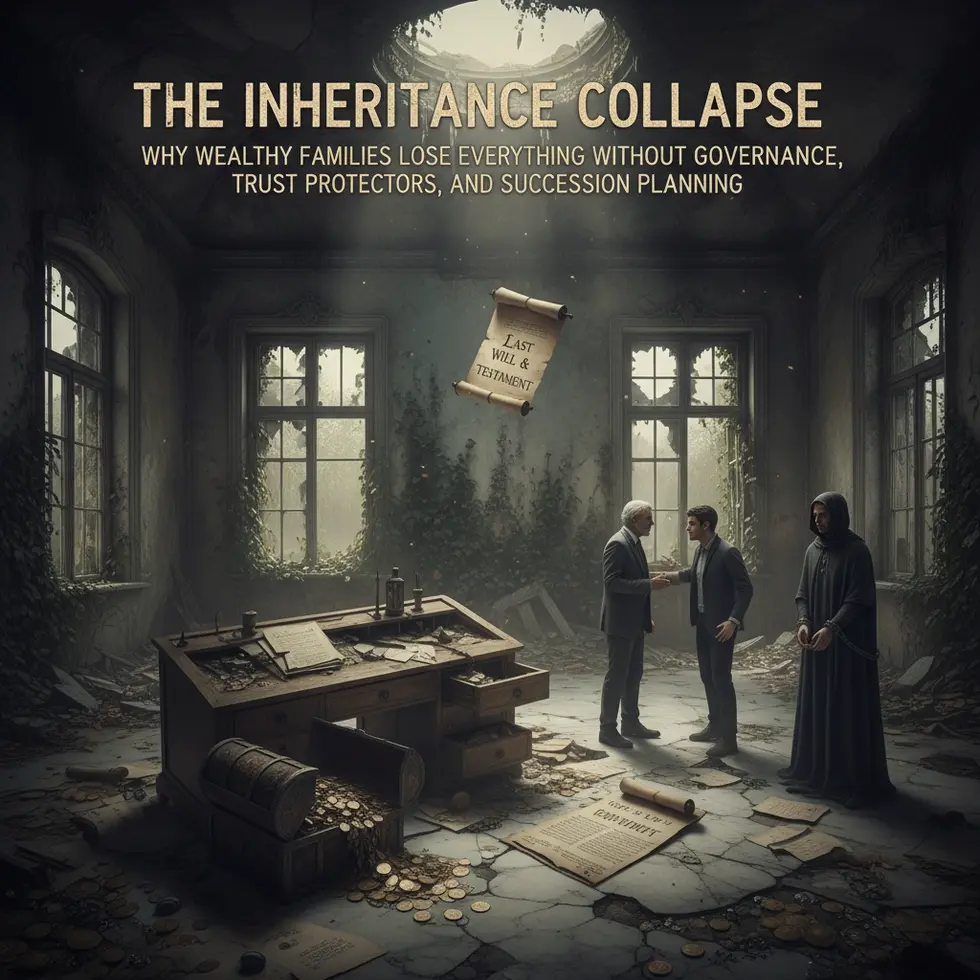
Here's a sobering reality check: 70% of wealthy families lose their entire fortune by the second generation. By the third generation, that number jumps to a staggering 90%. This isn't about market crashes or bad investments, it's about families making the same preventable mistakes over and over again.
After working with high-net-worth families for years, I've seen this pattern repeat itself countless times. The wealthy patriarch builds an empire, assumes his kids will naturally know how to manage it, and then watches helplessly as everything crumbles within a generation or two.
The good news? This inheritance collapse is completely avoidable if you understand what causes it and take action now.
The Three Silent Killers That Destroy Family Wealth
Research tracking over 3,000 wealthy families for 20 years identified three "silent killers" that destroy generational wealth. Understanding these is the first step to protecting your family's financial future.

Communication Breakdown (60% of Failures)
Most wealthy parents never talk to their kids about money. I get it, you don't want to spoil them or make them feel entitled. But here's what actually happens: your children inherit a complex financial empire with zero understanding of how it works.
They're suddenly responsible for investment portfolios, real estate holdings, business interests, and trust structures they've never heard of. Without proper communication, they either hand everything over to advisors they don't understand, or they freeze up and let everything deteriorate.
Unprepared Heirs (25% of Failures)
Your children might have Harvard MBAs, but that doesn't mean they understand wealth management. Academic success doesn't translate to financial stewardship. When unprepared heirs inherit wealth, they typically make one of two critical errors: they either spend recklessly because they don't understand the consequences, or they become paralyzed by the complexity and avoid making any decisions at all.
Weak Structural Firewalls (15% of Failures)
Many estate plans look impressive on paper but crumble under real-world pressure. Common structural weaknesses include insufficient liquidity for taxes and administration costs, unclear ownership structures, trustees without adequate authority, and zero accountability mechanisms.
See how advanced asset protection strategies can keep your family wealth safe—explore our Asset Protection services.
Why Traditional Estate Planning Falls Short
Most families think having a will and trust is enough. It's not. Traditional estate planning focuses on legal document creation, not family governance. You can have the most sophisticated trust structure in the world, but if your family doesn't know how to work within it, everything will fall apart.

I've seen families with hundreds of millions in assets end up in bitter court battles because nobody established clear governance protocols. The Safra banking dynasty is a perfect example, despite their enormous wealth, Joseph Safra's death in 2020 triggered massive inheritance disputes because the succession planning was unclear.
The Modern Complications Making Everything Worse
Today's families face additional challenges that previous generations never had to navigate:
Longer Lifespans
When the family patriarch lives to 95, his "heirs" might be in their 70s before inheriting. This timeline compression creates massive pressure and often leads to disputes among aging beneficiaries with competing needs.
Complex Family Structures
Modern families include remarriages, blended families, same-sex partnerships, and international complications. Traditional estate documents weren't designed for this complexity, creating legal ambiguities that destroy family harmony.
Global Asset Complexity
Many wealthy families now own assets across multiple countries, each with different tax laws, inheritance rules, and legal requirements. Without proper cross-border planning, these assets become massive liabilities.
See how advanced asset protection strategies can keep your family wealth safe—explore our Asset Protection services.
The Trust Protector Solution
One of the most powerful tools for preventing inheritance collapse is the trust protector, an independent third party who oversees trust operations and mediates family disputes before they explode into litigation.

Think of a trust protector as a family wealth referee. They have the authority to:
- Remove and replace trustees who aren't performing
- Modify trust terms as circumstances change
- Resolve beneficiary disputes before they reach court
- Ensure transparency and accountability in trust operations
This isn't just theoretical, I've seen trust protectors save families from complete financial meltdown by stepping in when communication broke down and providing objective oversight when emotions ran high.
Ready to put true governance in place for your legacy? Start here with comprehensive estate planning.
Building Real Governance Systems
Effective family governance goes far beyond legal documents. It requires creating systems that actually work when your family faces real challenges:
Establish Communication Protocols
Start having money conversations with your heirs now, not when it's time to transfer wealth. Discuss your values, investment philosophy, and long-term vision for the family assets.
Implement Heir Preparation Programs
Create structured learning experiences where your children can participate in investment decisions under supervision. Give them "shadow roles" where they can understand the complexity before taking on full responsibility.
Design Accountability Frameworks
Distinguish between being a beneficiary (a legal entitlement) and being a steward (an earned responsibility). Your heirs should demonstrate competency and sound judgment before gaining control of significant assets.
Ready to put true governance in place for your legacy? Start here with comprehensive estate planning.
Succession Planning That Actually Works
Real succession planning addresses the human element, not just the legal mechanics. It includes:
- Clear performance benchmarks heirs must meet before gaining control
- Transparent reporting mechanisms so everyone understands what's happening
- Dispute resolution processes that function before conflicts reach litigation
- Regular family meetings to maintain communication and alignment

The most successful families I work with treat wealth transfer as an ongoing process, not a single event. They involve multiple generations in decision-making, create opportunities for younger family members to prove themselves, and establish clear consequences for poor stewardship.
Ready to put true governance in place for your legacy? Start here with comprehensive estate planning.
The California Advantage
California law provides unique opportunities for sophisticated family governance structures. Our state's favorable trust laws, combined with federal tax benefits, create powerful wealth preservation opportunities for families willing to plan properly.
For example, dynasty trusts combined with Private Placement Life Insurance can provide multi-generational wealth protection while maintaining family control and minimizing tax obligations.
Taking Action Now
The statistics are clear: without proper governance, trust protectors, and succession planning, your family will lose everything within two generations. But families that address communication breakdowns, prepare their heirs properly, and establish strong structural firewalls can preserve and grow wealth across generations.
The question isn't whether you have enough wealth to worry about this, it's whether you have too much to lose by ignoring it.
FAQ: Family Wealth Governance and Trust Protection
Q: When should I start involving my children in wealth discussions?
A: Start age-appropriate conversations by their teens. Begin with family values and gradually introduce financial concepts. The key is making wealth discussions normal, not taboo.
Q: What's the difference between a trustee and a trust protector?
A: Trustees manage day-to-day trust operations and investments. Trust protectors provide oversight, can remove trustees, resolve disputes, and modify trust terms as needed. Think of trustees as managers and trust protectors as board members.
Q: How do I know if my heirs are ready to inherit?
A: Establish clear benchmarks: financial education completion, demonstrated responsibility with smaller amounts, understanding of family values, and ability to work collaboratively with advisors and family members.
Q: Can trust protectors prevent family litigation?
A: Yes. Trust protectors have authority to resolve disputes before they reach court, modify trust terms to address changing circumstances, and ensure transparency that prevents misunderstandings from escalating.
Q: What happens if I don't have succession planning in place?
A: Your estate will be subject to court supervision, potentially triggering family disputes, massive legal fees, public disclosure of family finances, and significant delays in asset distribution.
Q: How often should family governance structures be reviewed?
A: At minimum every 3-5 years, or when major life events occur (deaths, divorces, births, business changes). Tax law changes may also require updates to maintain effectiveness.
Don't let your family become another inheritance collapse statistic. The time to act is now, while you still have the opportunity to guide the process and ensure your legacy survives for generations.
Ready to protect your family's wealth? Contact the Law Office of James Burns to discuss comprehensive succession planning, trust protector arrangements, and family governance systems designed to preserve your legacy across generations. Call us today: your family's financial future depends on the decisions you make right now.
Further Reading
Browse more insights in our Wealth Protection Blog.
Disclaimer: This article provides general information about estate planning and family governance concepts. It does not constitute legal advice. Every family's situation is unique and requires personalized analysis. Consult with qualified estate planning counsel before implementing any wealth transfer strategies.
Sources Used: Williams & Preisser 20-year study of 3,000 wealthy families; Safra and Luksic family case studies; estate planning research on generational wealth transfer patterns; California trust law analysis.

Comments
There are no comments for this post. Be the first and Add your Comment below.
Leave a Comment