CLASSIFIED BRIEFING : EYES ONLY
Intro Scene — The Invisible War
You didn't build a fortune to parade it; you built it to endure. Imagine your generational wealth seated at a candlelit table—polished silver, quiet power—while unseen silhouettes circle just beyond the edge of the light. This is not a contest of strength. It's an operation in stealth.
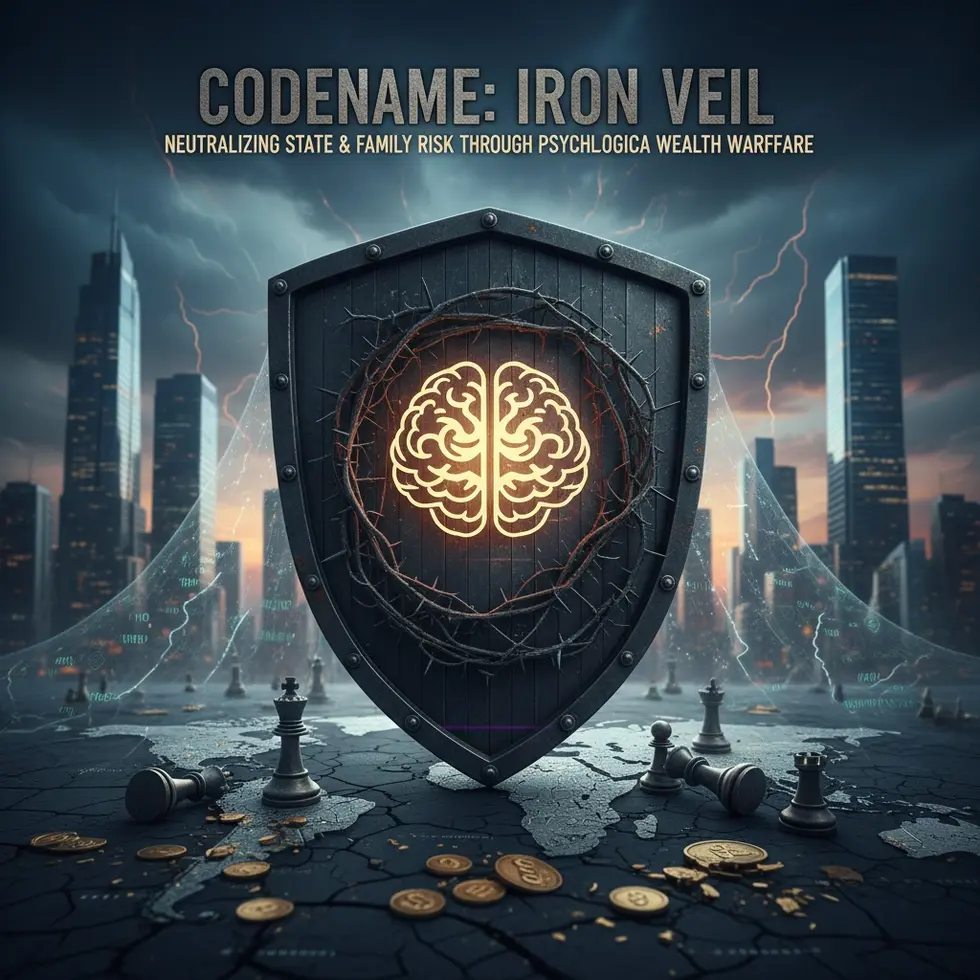
Operation Iron Veil is your doctrine. It treats wealth preservation as psychological warfare: controlling perception, restricting access, and engineering uncertainty so adversaries hesitate, miscalculate, and disengage. If you're a California founder, investor, or family leader, the mission isn't hiding money—it's managing detection, influence, and tempo. That's how modern asset protection wins.
Internal Threat Protocols
The most dangerous breach rarely arrives with a subpoena. It comes from within—heirs turned activists, fiduciaries beyond their brief, and advisors who confuse proximity with privilege. Neutralize internal risk with protocols that shape behavior, restrict authority, and compartmentalize information.
-
Conditional distributions with clarity
Tie access to performance, professionalism, and family harmony. Beneficiaries meet education, sobriety, or employment standards; distributions scale with impact, contribution, and conduct. This is governance, not punishment. The structure is typically an irrevocable trust with calibrated distribution standards and a letter of wishes that operationalizes your intent without becoming a litigation magnet. -
Trust protector powers as command authority
Install a trust protector with the power to remove and replace trustees, veto distributions that breach policy, correct drafting errors, or migrate the trust to jurisdictions with better privacy, tax, or creditor protections. Directed trust frameworks split roles: investment management, distribution discretion, and administrative control—so no single actor compromises the whole. -
Heir containment clauses
Build deterrence into the design. No‑contest provisions, mediation mandates, cooling‑off periods, and staged access blunt impulsive litigation. Include spendthrift and discretionary standards that keep assets beyond creditor reach, while trustee discretion throttles access when behavior trends hostile. -
Fiduciary risk controls
Require dual‑signatures for extraordinary transactions, periodic independent accountings, cybersecurity hygiene, and background screens for all fiduciaries with access. Advisors get role‑based visibility—nothing more. Your estate planning attorney in Orange County can be designated as counsel to the trust protector for fast, confidential response when protocol is tested.
Result: The family system becomes anti‑fragile. Expectations are managed, temptation is reduced, and bad actors face a steep, expensive climb with little chance of payoff.
Counter‑Surveillance Through Silence
Visibility invites targeting. Silence denies targeting data. Counter‑surveillance is how you erase your heat signature while staying fully compliant.
-
Strategic nondisclosure
Employ quiet trust features where permitted. Limit information rights to beneficiaries until defined milestones or ages. In California, where quiet trusts are constrained, use layered entities and third‑party trustees to maintain need‑to‑know disclosures while honoring statutory requirements. -
Private trust jurisdictions
Use jurisdictions engineered for privacy and control—South Dakota for directed trusts, decanting, flexible situs changes, and long‑term legacy trust planning; Cook Islands and Nevis for offshore asset protection with heightened creditor standards and short limitation windows. California residents often combine domestic structures with offshore asset protection for redundancy and leverage. -
Layered structures
Interpose manager‑managed LLCs and LPs between operating assets and trusts. Funnel voting control through independent managers. Use nominee officers for public filings where lawful. Map distribution authority to a protector rather than a trustee when appropriate, so pressure applied in one direction reveals nothing in another. -
California‑specific countermeasures
California does not recognize domestic self‑settled asset protection trusts. For California principals, we coordinate out‑of‑state trusts with compliant, onshore shields like a California Private Retirement Plan (CPRP), and pair with insurance‑based wrappers such as Private Placement Life Insurance (PPLI) for tax efficiency and discretion. Each layer reduces discoverability, compresses attack vectors, and lowers the appetite to pursue.
Outcome: Adversaries encounter fog—blurred asset maps, limited disclosure, and jurisdictions designed to slow, exhaust, and deter.
Deploying Decoy Trusts & Deterrence Assets
Deception is lawful when the structures are real and the records clean. We don't hide assets; we confuse hunters.
-
Decoy trusts
Establish legitimate, modestly funded trusts that are discoverable and defensible. They satisfy the psychological need to “find something,” channeling challenger focus toward assets with limited value or conditional availability. Meanwhile, core assets sit behind different trustees, different entities, and different jurisdictions—unseen, unprovoked. -
Nominee and interface entities
Use nominees lawfully to appear on public filings while beneficial control remains remote in the trust architecture. Front‑end companies serve as interaction layers with banks, vendors, or counterparties. Contracts and governance documents are drafted to maintain arm's‑length separation and protect the true command center. -
Deterrence assets
CPRP accounts for California entrepreneurs, properly tethered to retirement purpose, can enjoy powerful statutory protections when implemented with integrity. PPLI functions as a stealth balance sheet—policy‑held investments compound inside the policy wrapper; ownership by an irrevocable trust can combine tax deferral, privacy, and enhanced creditor posture. This is where psychology meets law: opposing counsel sees complexity with low return potential and looks elsewhere. -
Dynasty arc
Your dynasty trust California plan may rely on satellite jurisdictions for duration and discretion, while the family maintains California connectivity through operating companies and real estate. We harmonize situs, tax reporting, and governance so your long‑range legacy trust planning stays aligned with current law and practical enforcement reality.
Psychological Defense of Legacy
Wealth defense is behavioral mastery. Win the mind, and you rarely fight the case.
-
Control perception
Adopt a posture of elegant understatement. Publish generosity, not balances. Lead with impact investing and strategic philanthropy that align with your family charter. This Ogilvy‑clean narrative builds social proof while redirecting curiosity away from structure. -
Engineer expectations
Train heirs to see wealth as responsibility, not entitlement. Family councils, charters, and periodic “read‑ins” build discipline and reduce fantasy. The more predictable the rules, the less energy is spent testing boundaries. -
Maintain tempo
USMC Warfighting doctrine emphasizes tempo and adaptability. We apply the same: periodic structure reviews, stick‑and‑move jurisdiction changes when statute shifts, quiet decants when better provisions emerge, and rapid replacement of fiduciaries who drift from mission. -
Apply Edward Bernays' axiom
You don't shout secrecy—you choreograph it. Share what supports the brand of stewardship. Obscure what invites targeting. Time disclosures to blunt opportunism. Use counsel to shape the information environment so adversaries misread capability and intent.
The net effect is deterrence through strategic opacity. Your adversaries see enough to respect you, not enough to tempt them.
Counter‑Surveillance Logistics: How the Law Office of James Burns Executes
-
Recon
We map exposure by category: operating companies, real estate, liquidity, IP, and personal guarantees. We identify where California law is a shield (CPRP) and where it isn't (self‑settled domestic APTs). -
Structure
We design an irrevocable trust framework with directed roles, add dynasty planning in favorable jurisdictions, and integrate offshore asset protection where appropriate. Layer in manager‑managed LLCs and interface entities to control optics and access. -
Armament
We calibrate CPRP, PPLI, and selective decoy elements. We align tax reporting with clean files and craft letters of wishes that transmit your doctrine without creating litigation tells. -
Discipline
We install trust protector powers, heir containment clauses, staged disclosure, and ongoing governance rhythms so the system self‑corrects as the environment shifts.
Frequently Asked Questions
Q: Is “psychological wealth warfare” legal, and how does it compare to traditional planning?
A: Yes. It's a mindset layered on top of lawful structures. We combine irrevocable trust design, dynasty trust California coordination, CPRP, and PPLI with counter‑surveillance practices. The “warfare” is strategic—controlling perception, access, and tempo within the law.
Q: I'm a California founder. Can I use an “asset protection trust California” structure?
A: California does not recognize domestic self‑settled asset protection trusts. We typically pair out‑of‑state or offshore asset protection with California‑compliant shields like a California Private Retirement Plan (CPRP), plus layered entities and third‑party trustees. The goal is deterrence without tripping California limitations.
Q: Where do private trust jurisdictions fit in?
A: South Dakota offers premier directed trust and decanting statutes for legacy planning. Offshore options such as the Cook Islands and Nevis raise creditor burdens and compress limitation windows. We coordinate situs, taxation, and disclosure so your plan is durable and compliant.
Q: How do decoy trusts and nominee structures avoid crossing the line?
A: We never fabricate. Decoy and nominee components are legitimate, documented, and compliant. They simply manage attention and expectations while core wealth is held in separate, better‑defended structures.
Q: What's the practical benefit of PPLI and CPRP?
A: PPLI is a tax‑efficient, privacy‑forward wrapper that can hold alternative investments and reduce audit surface while aligning with your estate plan. CPRP, when designed and administered for bona fide retirement purposes, can provide strong California statutory protection. Together, they function as deterrence assets within your broader wealth preservation strategies.
Q: Can I keep beneficiaries in the dark without harming relationships?
A: Use staged disclosure. Quiet trust features, letters of wishes, and family governance education build trust without revealing operational specifics. The objective is to protect the family from unnecessary targeting while keeping heirs aligned.
Q: Do these methods still work during divorce or litigation?
A: They work best when built early, documented cleanly, and maintained consistently. Properly structured trusts with independent fiduciaries, spendthrift provisions, and protector oversight create distance between you and the assets. Tempo matters; don't wait until you're served.
Q: Who should quarterback this?
A: Start with an estate planning attorney Orange County principals trust for high‑complexity engagements. At the Law Office of James Burns, we integrate legal, tax, insurance, and fiduciary teams and act as mission control for design, deployment, and discipline.
Call to Action
Operation Iron Veil has commenced. Your dynasty's survival depends on strategic invisibility. Begin your mission.
Begin your Iron Veil Operation with James Burns, Esq., at the Law Office of James Burns. We serve high‑net‑worth and ultra‑high‑net‑worth families, founders, and investors who require advanced estate design, asset protection, and tax‑aligned structures—onshore and offshore. Secure a confidential briefing at www.jamesburnslaw.com.
Disclaimer:
This article is for informational purposes only and does not constitute legal, tax, or investment advice. Asset protection, trust, insurance, and tax strategies should be implemented only after consultation with qualified professionals who understand your specific facts, goals, and jurisdictional considerations.
© Law Office of James Burns. All rights reserved. “Operation Iron Veil” and related strategy language are proprietary concepts of the Law Office of James Burns. No portion of this content may be reproduced, adapted, or distributed without express written permission.

Comments
There are no comments for this post. Be the first and Add your Comment below.
Leave a Comment