
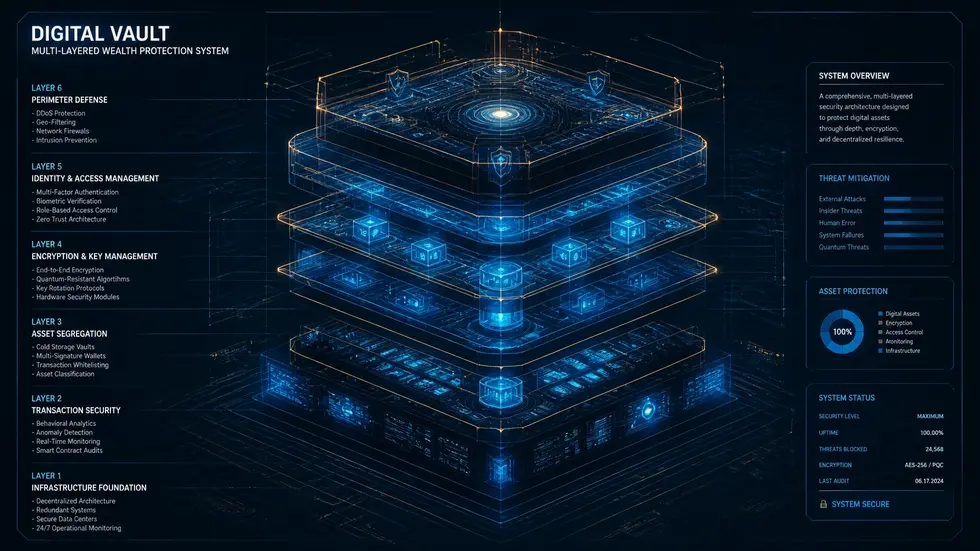
You've built a fortress around your family's future, but the ground underneath is shifting. If you have Private Placement Life Insurance (PPLI), you've likely been told it's the ultimate "black box" for tax-free growth and asset protection. For years, it was. But on April 13, 2026, Senator Ron Wyden (D-OR) dropped a tactical explosive into the Senate Finance Committee that threatens to turn your tax-deferred sanctuary into a transparent, high-tax liability.
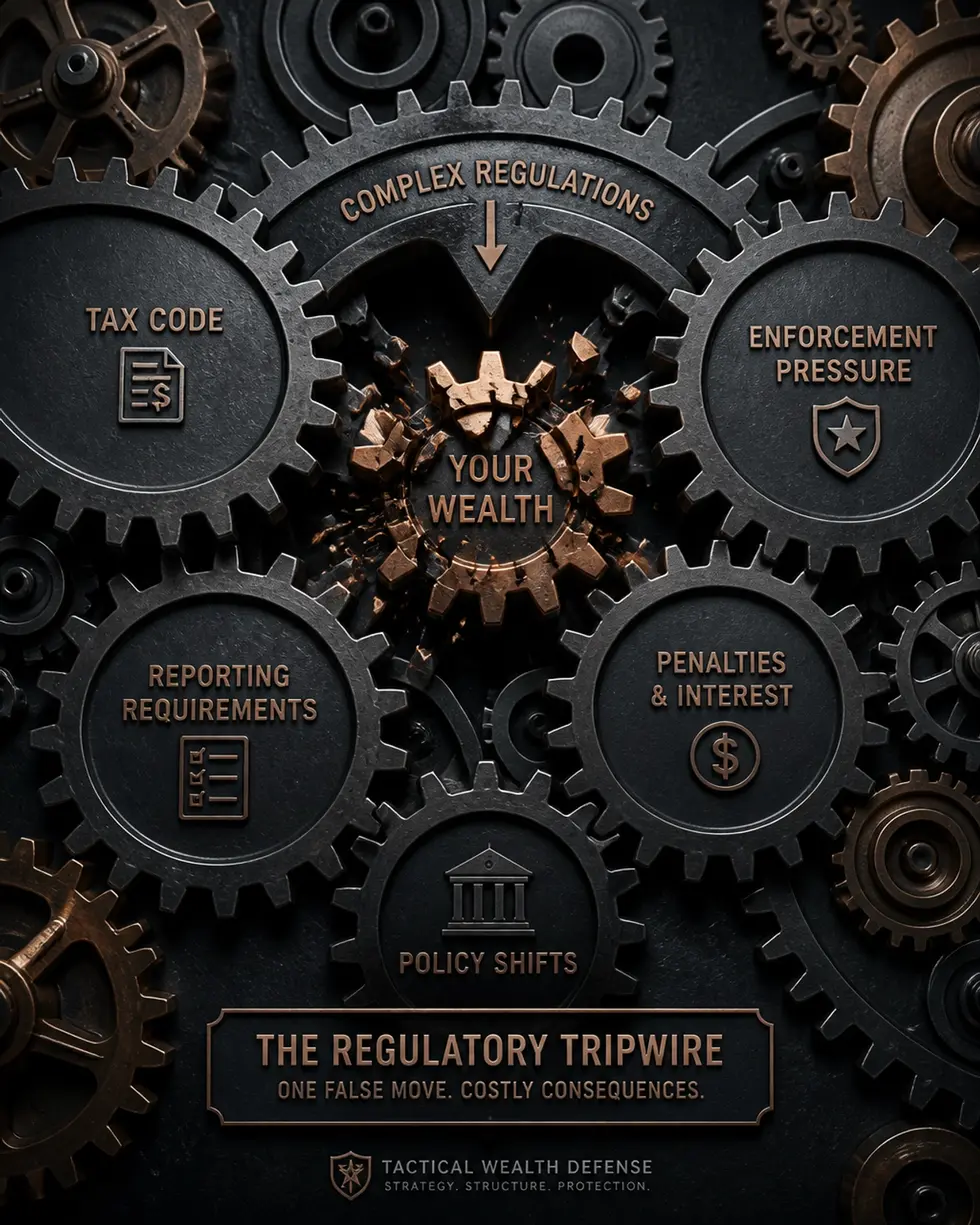
It's called the "Protecting Proper Life Insurance from Abuse Act" (S. 4279). Most advisors are still reading the summary. We've already dissected the code. If you aren't looking at the "25-Contract Trap" or the "Aggregation Rule," you're flying blind into a regulatory storm that carries $1 million-per-month penalties. This isn't just another bill that "might" happen; it's a blueprint for how the government intends to dismantle the "Buy, Borrow, Die" strategy once and for all.
The Hidden Risk: The APPC Kill Switch
The bill introduces a new designation that should keep every high-net-worth individual in California awake at night: the Applicable Private Placement Contract (APPC). Under the new IRC § 7702C, your PPLI policy is no longer just "life insurance." If it falls into the APPC category, the tax-free "wrapper" dissolves.
Here is the mechanical reality: A PPLI contract is classified as an APPC if fewer than 25 contracts are supported by the segregated account. You might think, "I'll just pool this with my family's other policies." Think again. Under § 7702C(c)(2)(A), the "Related Person" rule kicks in. Contracts held by your spouse, children, family trusts, or entities under your common control are aggregated and treated as one single contract.
This is the legislative equivalent of a precision strike. By aggregating family policies, the bill ensures that most bespoke, boutique PPLI structures will fail the 25-contract test. If your policy is an APPC, the "inside buildup" (your investment gains) is taxed annually on a flow-through basis, exactly like a grantor trust. The death benefit exclusion under § 101(a)? Gone. The "once an APPC, always an APPC" rule ensures there is no escaping the classification once it's triggered.
A Real-World Example: The $40M "Boutique" Disaster
Consider a tech founder in Silicon Valley, we'll call him Elias. Elias moved $40 million into a PPLI structure three years ago. His advisor set up a dedicated segregated account managed by a tier-one hedge fund. Because it was "customized," Elias was the only policyholder in that specific account.
Under current law, Elias enjoys tax-free growth and can take low-interest loans against the cash value. But under the 2026 Wyden Bill, Elias's structure is a textbook APPC. Since there are fewer than 25 contracts in his account, the "wrapper" is stripped away. Elias would now owe ordinary income tax on every dollar of appreciation inside that policy every year. Worse, if Elias were to pass away, his family would lose the multi-million dollar tax-free death benefit they were counting on to pay estate taxes. Instead, the death benefit would be treated as taxable income.
The Consequences: Financial Radiation and $1M Penalties
The Wyden Bill doesn't just tax you; it punishes you. New IRC § 6050BB mandates annual information returns for all APPCs. If you fail to comply, the penalty structure is among the steepest in the entire Internal Revenue Code. We're talking about a $1 million initial penalty, plus an additional $1 million for every 30 days of non-compliance.
This is not a "fix it later" situation. This is financial radiation.
For those of you with foreign PPLI, the news is even grimmer. Foreign-issued PPLI is considered an APPC per se. The bill ignores the § 953(d) election that many carriers and policyholders rely on to treat foreign insurers as domestic for tax purposes. If your policy is in Bermuda or the Cayman Islands, the Wyden Bill treats it as a "Trap." You are immediately exposed to the flow-through taxation and the loss of the death benefit exclusion.

The Strategic Solution: The Wealth Defense Matrix
Do not panic, but do not wait. While GovTrack gives this bill a low prognosis for immediate passage, the "Buy, Borrow, Die" framing has gained massive political traction. Even if S. 4279 doesn't pass in its current form, the IRS is already using these arguments to increase scrutiny under the existing "Investor Control Doctrine."
The solution isn't to abandon PPLI; it's to evolve your structure into a "Wealth Defense Matrix." This involves three critical tactical shifts:
- The 180-Day Pivot: The bill provides a 180-day window to exchange or convert an APPC into a non-APPC. This means moving assets into "Insurance Dedicated Funds" (IDFs) that are broadly held by more than 25 unrelated policyholders. You lose some "customization," but you save the tax wrapper.
- The CPRP Protection Dome: For California residents, the California Private Retirement Plan (CPRP) provides a "Protection Dome" under CCP § 704.115. While PPLI focuses on tax-efficient growth, the CPRP focuses on making your assets invisible to creditors and judgments. By layering a CPRP with a compliant PPLI, you create a dual-layered defense that a single bill can't penetrate.
- Monetization via Cash Premium: For offshore PPLI, stop trying to contribute appreciated assets "in-kind." There is no broadly defensible method to guarantee "no gain" on those transfers. The safest tactical approach is to keep those assets outside the policy, monetize them with a loan, and pay the premium in cash.
Request a Situation Readiness Briefing (SRB)
Your current estate plan was designed for a world that no longer exists. The Wyden Bill, combined with the GRATS Act (S. 4287), represents a coordinated assault on high-net-worth wealth transfer.
Don't wait for the bill to become law. Request a Situation Readiness Briefing today. We will map the control, probate, tax, incapacity, and family-transition exposures in your current structure and determine if your PPLI is a ticking time bomb or a fortified asset.
Founder Insight: Why "Standard" Advice is Dangerous
"I see it every day: HNW families relying on 'standard' PPLI pitches that promise the moon but ignore the structural tripwires. Most advisors are focused on the investment return; I'm focused on the control system. If the government can redefine your insurance as a grantor trust with one stroke of a pen, you don't have an asset, you have a target. At the Law Office of James Burns, we don't build paper structures; we build fortresses. We look for the 'Sledgehammer Test', if a court or the IRS hits your plan with everything they have, does it hold? If you're in a boutique PPLI with five other families, you just failed that test." , James Burns
Mission Summary: The 2026 PPLI Tactical Brief
- Objective: Prevent the reclassification of PPLI assets as taxable income.
- Threat: S. 4279 (The Wyden Bill) and the creation of the APPC designation.
- Key Mechanic: The 25-contract rule and related-party aggregation (§ 7702C).
- Consequence: Loss of § 101(a) death benefit exclusion and annual flow-through taxation.
- Defense: Immediate audit of segregated accounts, 180-day transition planning, and CPRP integration.
Technical Summary: The Definitive Framework for APPC Compliance
Core Legal Logic: The "Protecting Proper Life Insurance from Abuse Act" seeks to close the perceived gap between life insurance tax benefits and private equity/hedge fund investments. By introducing IRC § 7702C, the bill establishes a mechanical test for "Applicable Private Placement Contracts." Any policy that fails the 25-unrelated-contract threshold loses its status as life insurance for tax purposes. This triggers immediate flow-through taxation of income and gains under § 7702C(b) and disqualifies the death benefit from the § 101(a) exclusion.
Advanced Strategy: For HNW individuals, the primary defense against § 7702C is the "Aggregation Avoidance Strategy." This requires moving away from customized "managed accounts" and toward "Insurance Dedicated Funds" (IDFs) that satisfy the diversification requirements of IRC § 817(h) and the investor control doctrine as established in Rev. Rul. 2003-91 and Rev. Rul. 2003-92.
Comparison Matrix: Current Law vs. 2026 Wyden Bill (S. 4279)

The Sledgehammer Test: Audit Your PPLI Before the IRS Does
- The Count: Does your segregated account support fewer than 25 contracts?
- The Relation Check: Are the other policyholders in your account related to you or controlled by you? (If yes, they count as "one").
- The Pro Rata Audit: Does the segregated account support each contract on a fully pro rata basis as required by § 7702C(c)(2)(A)?
- The Jurisdiction Check: Is your carrier foreign-based? If so, have you planned for the loss of § 953(d) treatment?
- The Liquidity Test: If the 180-day transition window opens, do you have the liquidity or the "exchange rights" to move assets without triggering a taxable event?

Tactical FAQ: Navigating the 2026 PPLI Landscape
What exactly is an "Applicable Private Placement Contract" (APPC)?
Under the Wyden Bill, an APPC is any life insurance or annuity contract that is not "broadly available." The key metric is whether the underlying segregated account supports fewer than 25 contracts. If it doesn't, the policy is stripped of its tax-advantaged status.
Does the Wyden Bill affect existing PPLI policies?
Yes. While it includes a 180-day transition rule, there is no "grandfathering" for APPCs. Once the bill is enacted, you have a very short window to either comply with the new rules or face catastrophic tax consequences.
Why is the "Related Person" rule so dangerous?
Most elite PPLI structures are set up for a single family. You might have ten policies for various family members and trusts. Under the old rules, that worked. Under the new § 7702C(c)(2)(A), all ten of those policies are aggregated and counted as one contract. This makes it nearly impossible for a single family to meet the 25-contract requirement on their own.
What happens to my death benefit if my policy is an APPC?
The § 101(a) exclusion is eliminated. This means your beneficiaries will pay ordinary income tax on the entire death benefit. For a $50 million policy, this could result in a tax bill exceeding $18 million in California.
How does this relate to the GRATS Act (S. 4287)?
Senator Wyden introduced both bills nearly simultaneously. The GRATS Act targets traditional wealth transfer tools like 2-year GRATs and Grantor Trusts. Together, these bills represent a comprehensive effort to tax HNW wealth at every stage: growth (PPLI), transfer (GRATs), and death.
Is there any way to keep my PPLI private and still comply?
Compliance will require moving into larger, "non-bespoke" accounts that meet the 25-contract threshold. You will lose the ability to have a hand-picked manager for your specific sub-account, but you will retain the tax-free growth and death benefit of a qualified life insurance contract.
Resources & Authorities
- S. 4279: Protecting Proper Life Insurance from Abuse Act (Introduced April 13, 2026).
- S. 4287: Getting Rid of Abusive Trust Schemes Act (GRATS Act, Introduced April 14, 2026).
- IRC § 7702: Life Insurance Contract Defined.
- IRC § 817(h): Variable Contract Diversification Requirements.
- Rev. Rul. 2003-91: Guidance on Investor Control Doctrine.
- CCP § 704.115: California Private Retirement Plan Exemptions.
- Senate Finance Committee Investigation (Feb 2024): "Crackdown on PPLI Abuse."
- IRC § 1035: Certain Exchanges of Insurance Policies.
Disclaimers & IP Disclosures
Legal Disclaimer: S. 4279 and S. 4287 are proposed bills that have not been enacted as of the date of this writing. The information in this article is for educational purposes only and does not constitute legal, tax, or investment advice. The "OBBBA" 2025 Act assumptions (permanence of the $15M exemption) are based on current firm projections and do not guarantee future legislative outcomes. This content does not create an attorney-client relationship. Regardless of this bill's prospects, PPLI must comply with existing law: the investor control doctrine, diversification requirements, and life insurance qualification standards remain the governing framework. Consult with qualified tax counsel at the Law Office of James Burns before making any planning decisions.
IP Disclosure: "Wealth Defense Matrix," "Protection Dome," and "Situation Readiness Briefing (SRB)" are proprietary service marks of the Law Office of James Burns. All rights reserved.

Comments
There are no comments for this post. Be the first and Add your Comment below.
Leave a Comment