
By James G. Burns, Esq., LL.M. (Tax), TEP · November 15, 2026
Can one estate plan cover a family with assets or heirs in two countries?
A coordinated plan can address both countries, but signing a California trust does not by itself settle foreign succession, tax, ownership, or administration questions. Begin with one shared inventory, identify the rules affecting each person and asset, and have the relevant advisers reconcile the instructions before anyone changes title or signs another will.
The question is personal before it is technical. Your daughter lives in California. Your parents remain overseas. A family home carries memories that cannot be divided on a spreadsheet. When someone dies, the people left behind need a way to act without first discovering which professional holds the missing piece.
A cross-border inheritance plan should connect the family's intentions to a usable process. Who receives the property? Who can manage it? Which country expects a filing? Where will the cash come from while a transfer is pending? Answering only the first question leaves substantial work for the family.

Start with the people, not the country names
“We have property in two countries” is an opening fact, not a complete diagnosis. Record each relevant person's citizenships, actual residence, anticipated moves, and connections to the property. Include the owner, spouse, intended heirs, trustees, executors, and anyone expected to make decisions during incapacity.
Do not use citizenship, immigration status, income-tax residence, and estate-tax domicile as interchangeable labels. The IRS explains that residence for federal estate and gift tax purposes turns on domicile; a green card alone does not conclusively establish it. The analysis can therefore differ from the one used for income-tax filings. [1]
That distinction belongs on the planning sheet because it affects which questions counsel must investigate. A family should not infer that spending a particular number of days abroad settles every tax or inheritance issue. Each conclusion needs its own factual basis and governing rule.
A hypothetical family shows where the gaps appear
Consider a hypothetical California couple with an adult son in the United States, a daughter living in Italy, and an interest in a home overseas. Their California trust divides the estate equally. They also have an older foreign will and local bank instructions.
The parents believe “equal shares” resolves the inheritance. The daughter expects to retain the overseas home. The son assumes he will receive comparable cash. Neither knows whether the older will is consistent with the trust, whether the property can be transferred as intended, or who will handle local administration.
No one needs to have made a drafting error for the family to face a problem. Asset values may have changed. A child may have moved. A bank may require documents that no one has located. The issue is whether the combined arrangement produces the intended outcome under the relevant laws.
The useful response is a coordinated review before a death, not an assumption that the newest document controls everything. This example illustrates planning questions; it does not predict Italian law or the result for any actual family.
Separate inheritance rights from the tax calculation
Which law determines the heirs is a different inquiry from which government taxes a transfer. In participating EU countries, the Succession Regulation generally uses habitual residence at death as its starting point and permits a qualifying choice of the law of nationality. Scope, exceptions, and local implementation require advice. The framework does not make inheritance taxes or matrimonial property rules disappear. Ireland and Denmark do not participate. [2]
A California family should therefore ask local counsel what governs the particular succession and whether any available choice-of-law provision serves the family's objectives. It should separately ask the tax advisers how the proposed transfer is treated. A nationality clause is not a general exemption from foreign tax.
Likewise, a trust's creation, administration, and recognition raise questions beyond a succession election. Regulation (EU) No 650/2012 expressly excludes taxation and the creation, administration, and dissolution of trusts from its scope. Do not treat one election as a solution for every component of a family structure. [3]
Make the documents agree before adding another one
A foreign will may be useful. So may an appropriate local ownership arrangement. Neither should be added without reviewing the existing instruments together. Counsel should check each document's asset scope, revocation language, fiduciary appointments, distribution instructions, and interaction with the others.
An expansive revocation clause is a practical concern when separate instruments are intended to coexist. Ask both advisers to confirm what remains effective after the proposed signing. The answer should be documented, rather than left to a family's recollection of two separate conversations.
The same discipline applies to a proposed transfer into a California trust or company. Have the relevant professionals evaluate local title requirements, tax consequences, financing terms, reporting, and eventual transfer procedures first. A familiar U.S. structure should not be exported solely because it works well for the California home.
Use one coordination sheet for the whole inheritance
The family needs a shared working record that exposes unanswered questions without pretending to replace legal documents. Prepare a row for each significant asset. Record current facts and identify which adviser must confirm the legal result. Mark an unknown as unknown; a confident guess is harder to correct later.
| Record | Question to resolve | Evidence to retain |
|---|---|---|
|
Owner and asset location |
Who owns it now, and how is ownership recorded? |
Current title, account record, or entity register |
|
Intended recipient and control |
Outright inheritance, continuing trust, sale, or another result? |
Coordinated instructions and counsel's analysis |
|
Transfer route and authority |
Which person and procedure can complete the transfer? |
Institutional requirements and local advice |
|
Taxes and reporting |
Which estate, beneficiary, or fiduciary may need to file or pay? |
Adviser responsibilities and deadline calendar |
|
Liquidity and records |
Who pays carrying costs before assets are available? |
Cash plan, valuations, contact list, document locations |
Keep the sheet securely and give access only to appropriate people. It should point to the authoritative records, not contain passwords or substitute informal wishes for legally effective instructions. Update it when the underlying facts change.
Reporting can matter even when the receipt is not taxable income
A U.S. recipient should not equate “inheritance” with “nothing to report.” Under IRS guidance, gifts or bequests from a nonresident alien or foreign estate generally require Form 3520 reporting when the relevant aggregate exceeds $100,000 during the taxable year. Related-party aggregation rules apply. Different rules govern purported gifts from foreign corporations or partnerships. [4]
Obtain the supporting records before the transfer: the source, legal character, date, value, and relevant estate documents. The family's tax adviser should determine the reporting obligation, applicable deadline, and any exceptions. A bank's willingness to accept a wire does not decide the recipient's tax compliance.
Distributions from a foreign trust require a separate analysis. The IRS identifies reporting requirements involving U.S. owners, transfers to foreign trusts, and distributions, loans, or uncompensated use of trust property, subject to applicable exceptions. The family should not label a trust distribution a simple foreign gift without review. [5]
Check treaty relief rather than assuming it exists
The existence of an income-tax treaty does not answer every estate or gift tax question. The IRS maintains a list of countries with estate or gift tax treaty provisions; the covered taxes and provisions differ. Eligibility and relief must be tested against the actual treaty and facts. [6]
Ask the advisers to identify who is taxed, which property is involved, whether a credit or other relief is available, and what filing preserves the claim. Differences in timing, valuation, or the taxpayer bearing the charge can complicate coordination. A projected tax benefit should have an identified legal basis and implementation step.
Foreign ownership also does not automatically remove U.S. estate-tax exposure. For a decedent who was neither a U.S. citizen nor U.S.-domiciled, U.S.-situated assets can trigger U.S. estate-tax and filing questions. Asset classifications and treaty provisions matter. This is one reason an overseas parent's U.S. investments deserve review before an inheritance occurs. [7]
Equal shares need a practical way to become equal
A house and an investment account can have similar headline values while creating very different burdens. The house may need repairs, local management, insurance, or a sale. Currency movements and transaction costs may change what each heir ultimately receives. Sentimental value rarely appears in an appraisal.
If one child wants the property, discuss a valuation method, whether a buyout is feasible, who bears interim costs, and what happens if the child cannot obtain financing. Counsel can translate an agreed approach into appropriate provisions. Do not promise that an informal family understanding will bind every person or authority involved.
Liquidity deserves its own decision. A valuable estate can still struggle to pay immediate administration expenses. Identify a lawful, accessible source of funds and have advisers assess any proposed insurance, borrowing, or sale arrangement. Avoid making an urgent property sale the unexamined default.

Give the advisers one assignment and a clear sequence
Begin with Risk Exposure Mapping: identify the family, assets, decision-makers, competing instructions, and events that could disrupt the intended transfer. Then build Control Architecture around those facts. Implementation comes next, with responsibility assigned for every signature, title change, institutional instruction, and filing.
The sequence matters. First confirm ownership and the family's intended result. Next obtain the jurisdiction-specific legal and tax analysis. Reconcile proposed changes in a shared review. Only then sign and implement the agreed arrangement. Finally, retain confirmations and explain the practical starting steps to the appropriate fiduciaries.
Assign a coordinating professional without assuming that one adviser can practice every country's law. Local counsel, tax specialists, fiduciaries, and institutions have distinct roles. Ask who will collect their conclusions and resolve inconsistencies. Two good advisers working from different facts can still produce incompatible instructions.
Revisit the plan after a relocation, marriage, death, major purchase, business sale, or change in a beneficiary's needs. Our Cross-Border Wealth Systems work starts with this coordination. Families seeking an appropriate engagement can review our Situation Readiness Briefing requirements; Abi can help establish fit, scope, and availability. Advanced and cross-border consultations are separate billable engagements. A trust is paperwork. Planning makes it work.
Frequently asked questions
Does my California trust automatically control foreign property?
No automatic result should be assumed. Review actual ownership, local recognition, succession rules, tax treatment, and transfer procedures with qualified counsel in the relevant jurisdictions before changing title.
Do we always need a separate will in each country?
No. The appropriate documents depend on the assets and applicable law. If separate wills are used, advisers should coordinate their scope, revocation clauses, fiduciaries, and distribution instructions.
Can choosing the law of my nationality eliminate inheritance tax?
A succession-law choice does not itself eliminate tax. In participating EU countries, an available nationality election addresses succession within the applicable framework; tax and other excluded matters require separate analysis.
Must a U.S. child report an inheritance from a foreign estate?
Form 3520 may be required. IRS guidance generally applies a threshold exceeding $100,000 to relevant aggregate gifts or bequests from nonresident aliens or foreign estates, with related-party aggregation. Foreign trust distributions follow separate rules.
Does an income-tax treaty guarantee relief from estate tax?
No. Identify the treaty provisions covering the particular tax and test eligibility, asset treatment, and filing requirements. The existence of an income-tax treaty alone does not establish estate-tax relief.
What should our family do first?
Prepare a secure inventory of people, ownership, assets, existing documents, intended recipients, and adviser contacts. Have the relevant professionals identify gaps and reconcile instructions before executing changes.
Legal disclaimer: General educational information reviewed November 15, 2026, not individualized legal, tax, investment, insurance, or foreign-law advice. Results depend on facts, documents, and applicable laws, which can change. Examples are hypothetical. No tax saving, creditor protection, or outcome is guaranteed. Reading this article or contacting the office does not create an attorney-client relationship. Obtain advice from qualified professionals in each relevant jurisdiction before acting.
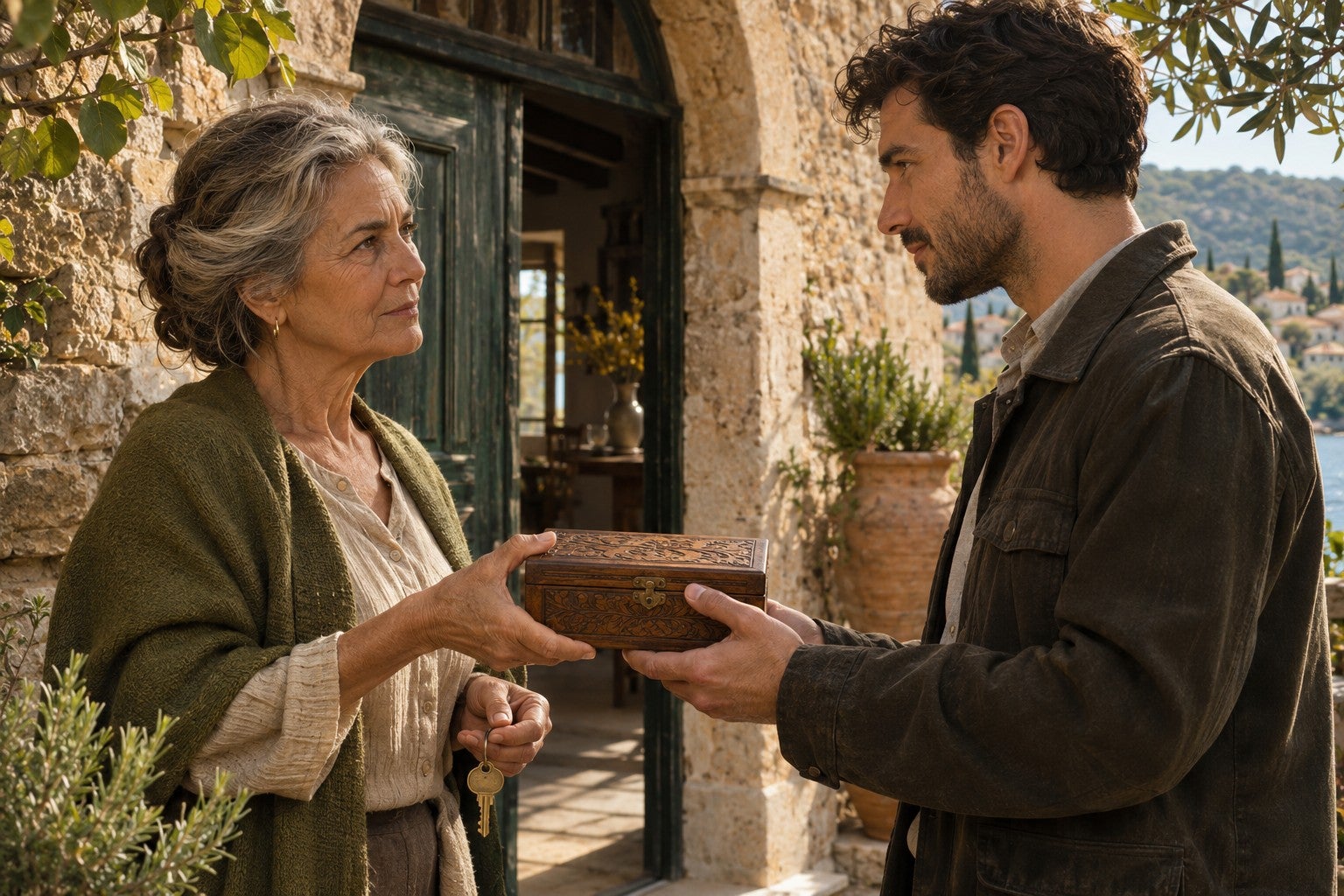
Intellectual-property disclosure: © 2026 Law Office of James Burns. Original editorial content. Editorial images are AI-generated conceptual scenes and do not depict actual clients or client matters. Referenced materials belong to their respective owners.

Comments
There are no comments for this post. Be the first and Add your Comment below.
Leave a Comment