
Need to revoke a power of attorney in California? You're not alone. Whether your agent isn't acting in your best interests, you want to appoint someone new, or your circumstances have changed, revoking a power of attorney is simpler than most people think.
The good news? If you have legal capacity and follow the proper steps, you can complete this process in about 5 minutes. Here's your complete legal checklist to revoke a power of attorney efficiently and legally in California.
Why People Revoke Powers of Attorney
Before diving into the "how," it's worth understanding the "why." Common reasons include:
- Loss of trust in the appointed agent
- The agent is no longer available or willing to serve
- Family circumstances have changed
- You want to update to a more comprehensive document
- The agent has made decisions you disagree with
- You're creating a new estate plan
Whatever your reason, California law gives you the absolute right to revoke any power of attorney you've granted, as long as you have legal capacity to make that decision.
The 5-Minute Legal Checklist
Step 1: Create Your Revocation Document (2 minutes)
The foundation of any valid revocation is a written document that clearly states your intent. Your revocation document must include:
- Your full legal name (exactly as it appears on the original POA)
- The full name of the agent you're revoking
- The exact date the original power of attorney was signed
- A clear statement that you're revoking all authority
- Today's date
Sample Language:
"I, [Your Full Name], hereby revoke the Power of Attorney dated [Original Date] in which I appointed [Agent's Full Name] as my attorney-in-fact. I withdraw and revoke all power and authority granted in that document, effective immediately."

Keep it simple and direct. California law doesn't require fancy legal language, just clear, unambiguous intent to revoke.
Step 2: Sign and Consider Notarization (1 minute)
Sign the document in your own handwriting. Notarization is not strictly required, but it provides extra legal protection if anyone questions your revocation.
Pro tip: If your original power of attorney was notarized, notarize the revocation as well.
Step 3: Notify Your Agent Immediately (1 minute)
This is the most critical legal step. Your agent's authority doesn't end until they receive actual notice of the revocation. Send your agent a signed copy via:
- Certified mail with return receipt
- Hand delivery with a witness
- Email with delivery confirmation (if allowed under your original agreement)
Step 4: Notify Third Parties (1 minute to start the process)
Contact everyone who may have a copy or rely on your power of attorney, including:
- Financial institutions (banks, brokers, insurance, etc.)
- Healthcare providers (doctors, pharmacies, hospitals)
- Real estate agents, accountants, tax preparers, lawyers, government agencies
Provide a copy of the revocation and ask for records to be updated.
[

Step 5: Secure the Original Documents
Retrieve and destroy the original power of attorney if possible. If you can't, be sure all copies are replaced with your revocation.
Keep records of:
- Who received notification
- When documents were sent
- Confirmation of receipt
- Any responses
What Happens After Revocation?
Once you've completed these steps, your former agent has no legal authority to act for you. However, banks and other parties who relied on the document before revocation can't be held liable for actions they took in good faith.
If you still need someone to help with your affairs, draft a new power of attorney with your chosen agent.
If your agent refuses to recognize the revocation or continues to act, you may need court intervention.
Special Circumstances to Consider
Incapacitated Principals:
If you lack legal capacity, you cannot revoke a power of attorney yourself. Others may need to petition the court in this situation.
Durable vs. Non-Durable Powers:
Durable powers remain effective during incapacity, but you can revoke them while competent. Non-durable powers end automatically if you become incapacitated.
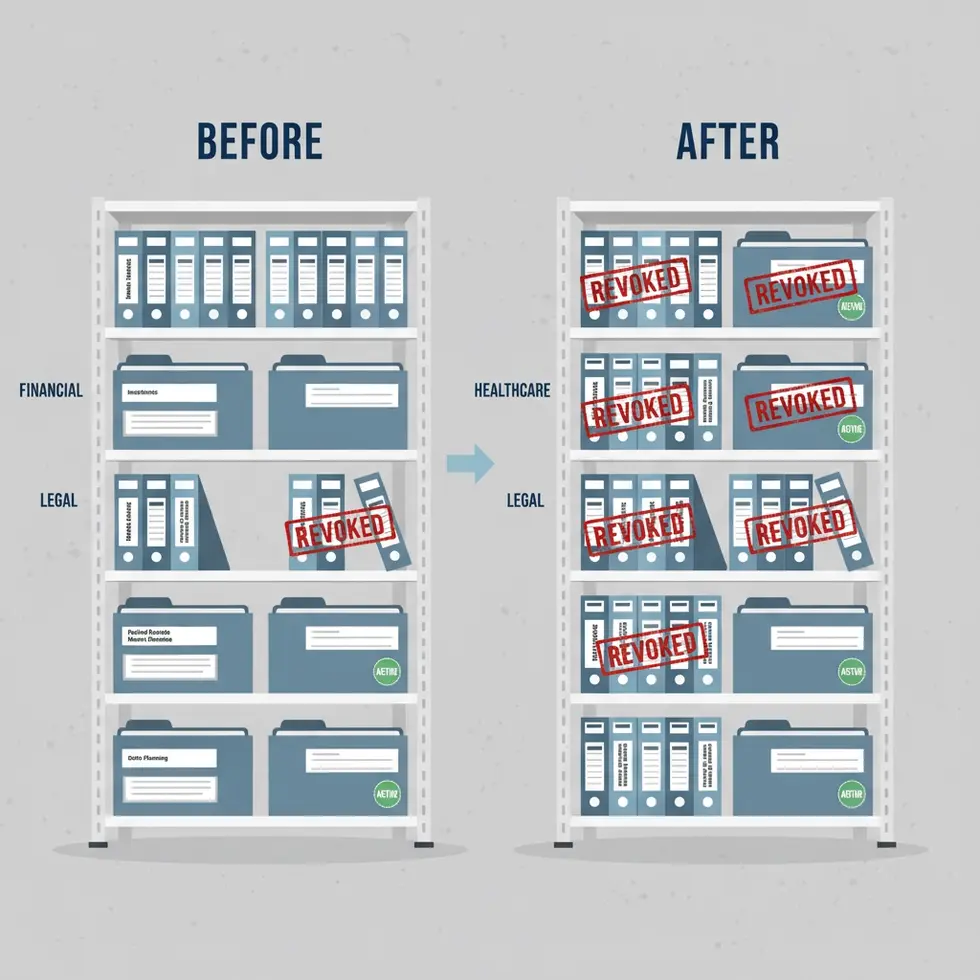
Healthcare vs. Financial Powers:
You may revoke only specific authorities if needed (for example, leave healthcare power intact but revoke the financial one).
Common Mistakes to Avoid
- Don't rely on verbal revocations—written notice is required.
- Don't forget to notify all relevant third parties.
- Keep revocation proof for your records.
- Some banks or agencies may require extra paperwork—always follow up.
When to Seek Legal Help
Consider consulting an attorney if:
- You're worried about your legal capacity
- Your agent is uncooperative
- Significant assets are at risk
- You need to notify out-of-state institutions
Quick Reference Checklist
- Draft revocation document with all necessary details
- Sign document (notarize if possible)
- Notify agent (certified mail or delivery confirmation)
- Notify third parties
- Destroy old POA
- Keep records of everything
- Create a new POA if you still need one
Frequently Asked Questions
Can I revoke a power of attorney without telling my agent?
No. California law requires actual notice to your agent for effectiveness.
Do I need a lawyer to revoke power of attorney?
No, as long as you have capacity and follow the proper process.
How long does revocation take?
You can do the paperwork and core notifications in about five minutes.
What if I can't find the original POA?
Notify the agent and all third parties who might have a copy.
What if my agent ignores the revocation?
They can be held liable for acting without authority and you may need legal enforcement.
Does revoking a POA affect my will or trust?
No, it only removes your agent's authority during your life.
Call to Action
Need help revoking a power of attorney or creating new estate planning documents?
Contact the Law Office of James Burns today. Call (949) 305-8642 or visit www.jamesburnslaw.com for a confidential consultation.
Disclaimer
This blog post is provided for informational purposes only and does not constitute legal advice. Laws can change, and every situation is unique. Please consult with a qualified California attorney before making any legal decisions about power of attorney revocation.
Intellectual Property Disclosure
This article and its contents are the intellectual property of The Law Office of James Burns. Unauthorized copying or distribution, in whole or in part, is prohibited without written permission.

Comments
There are no comments for this post. Be the first and Add your Comment below.
Leave a Comment