

The billionaire sells his company for $500 million. The IRS expects their cut: immediately. But the billionaire has other plans.
Instead of writing a massive check to Uncle Sam, he structures an installment sale, spreading the gain across decades. Then he funnels those payments into a private placement life insurance policy, where investments compound tax-deferred, accessible tax-free, and transfer to heirs without estate taxes.
This isn't tax evasion: it's tax engineering. And it's how elite families have quietly built generational wealth while everyone else pays full freight.
The Perfect Storm: Why Now Is the Time for Advanced Tax Deferral
California's proposed wealth tax. Federal estate tax exemptions dropping by 50% in 2026. Rising capital gains rates. The perfect storm is brewing for high-net-worth families, and those without sophisticated tax deferral strategies will get crushed.
Smart families are moving now: before the window closes. They're using installment sales to defer immediate tax hits and private placement life insurance (PPLI) to create tax-free wealth machines that compound for decades.
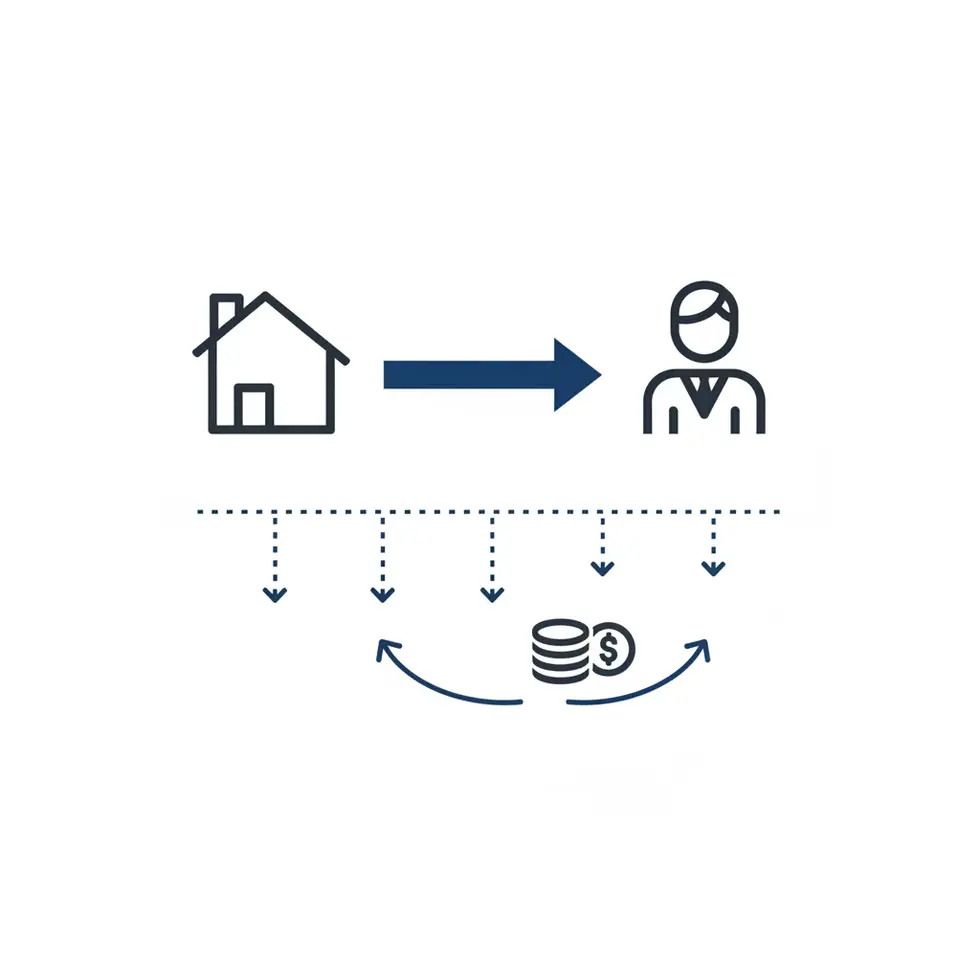
The combination isn't just powerful: it's transformational. While ordinary investors lose 20-37% of their gains to taxes annually, elite families using installment sales and PPLI defer taxes indefinitely and often eliminate them entirely.
Installment Sales: The Ultimate Tax Timing Tool
An installment sale lets you sell appreciated assets: businesses, real estate, investment portfolios: and receive payments over time instead of a lump sum. This spreads capital gains recognition across multiple years, keeping you in lower tax brackets and deferring the tax bite.
Here's the magic: Instead of paying 20-37% in capital gains taxes upfront, you pay only as you receive installment payments. That gives your money decades more to compound before taxes hit.
The Technical Structure:
- Sell asset for installment payments over 10-30 years
- Recognize gain proportionally with each payment received
- Use Section 453 to defer taxes legally and automatically
- Reinvest tax savings for additional compound growth

Case Study: The Real Estate Dynasty
Sarah inherited commercial property worth $50 million with a $5 million basis. Rather than sell outright and face $9+ million in capital gains taxes, she structured a 20-year installment sale. Result: $45 million gain spread across two decades, keeping her in lower tax brackets while preserving capital for reinvestment.
Private Placement Life Insurance: The Invisible Wealth Engine
PPLI is the secret weapon of ultra-high-net-worth families. It's life insurance designed for investment flexibility, not death benefits. Inside the policy, investments grow tax-deferred with no K-1s, no annual tax reporting, and no contribution limits.
What makes PPLI special:
- Invest in hedge funds, private equity, and alternatives unavailable elsewhere
- All investment gains compound tax-deferred: no annual capital gains taxes
- Access cash value through tax-free policy loans
- Death benefits transfer tax-free to beneficiaries
- No probate delays or public disclosure

Unlike traditional accounts where the IRS takes its cut annually, PPLI lets investments compound uninterrupted. Over 20-30 years, this tax deferral creates exponentially more wealth than taxable alternatives. Also see https://www.jamesburnslaw.com/private-placement-life-insurance
Advanced Strategy: The Investment Manager Buffer
PPLI requires a regulated investment manager to maintain tax benefits: you can't directly control investments. But sophisticated families choose managers who understand their risk tolerance and investment preferences, creating indirect influence while preserving tax advantages.
The Synergy: How Installment Sales Power PPLI
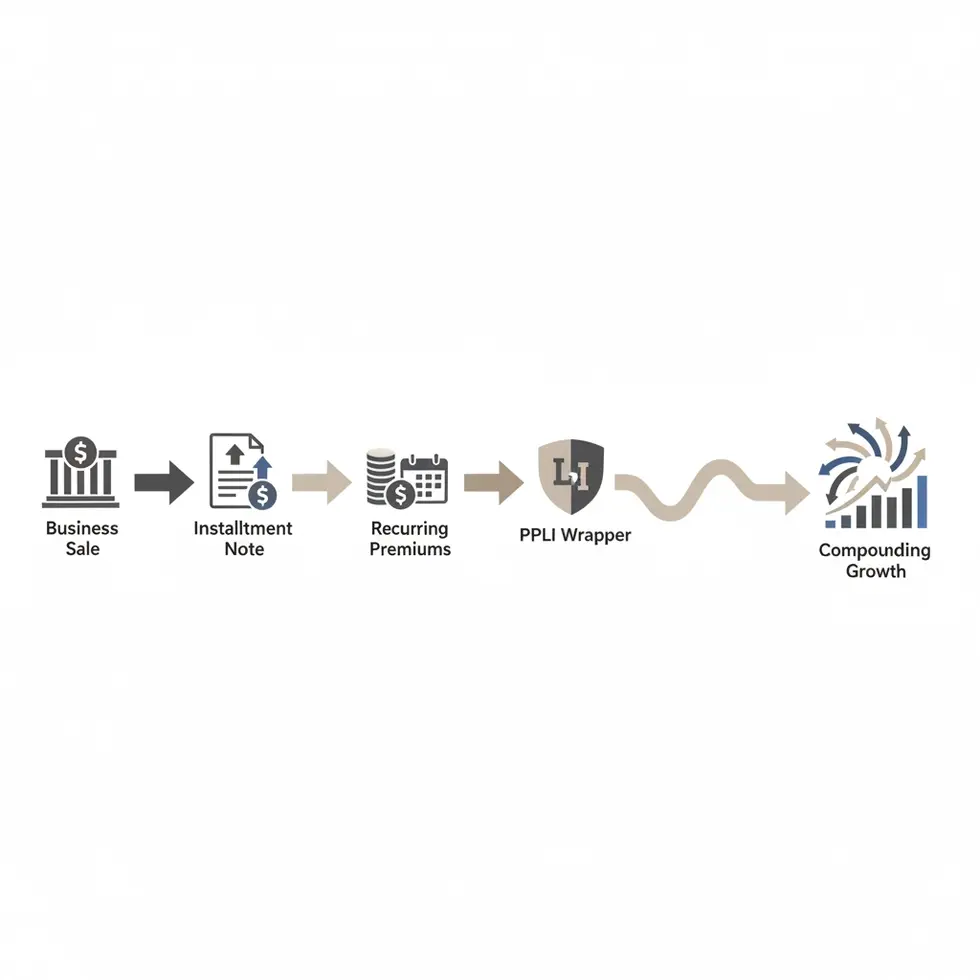
The real breakthrough happens when you combine these strategies. Installment sale proceeds fund PPLI premiums systematically, creating a dual tax benefit that's greater than the sum of its parts.
The Integrated Approach:
- Structure installment sale of appreciated business/property
- Use installment payments to fund PPLI premiums over time
- PPLI investments compound tax-deferred using sophisticated alternatives
- Access cash value tax-free during lifetime through policy loans
- Death benefits transfer to heirs tax-free, often estate-tax-free too
Real Example: Tech Entrepreneur's Exit Strategy
James sold his software company for $200 million using a 15-year installment sale. Annual payments of $13.3 million fund PPLI premiums, where investments in private equity and hedge funds compound tax-deferred. After 15 years, the policy's cash value exceeds $300 million: all accessible tax-free and transferring to his children without estate taxes.
The Estate Planning Multiplier Effect
When structured properly with irrevocable life insurance trusts (ILITs), PPLI removes assets from your taxable estate while providing tax-free wealth transfer to heirs. This creates multiple layers of tax efficiency:
- Current Tax Deferral: Installment sales spread recognition across years
- Investment Tax Deferral: PPLI eliminates annual investment taxes
- Estate Tax Elimination: Proper trust structures remove assets from estate
- Generation-Skipping Benefits: Dynasty trusts extend benefits for generations
With federal estate tax exemptions dropping to ~$6 million per person in 2026, families with $20+ million estates face devastating tax hits. PPLI structures created now: during the higher exemption period: lock in current benefits permanently.

Advanced Structures: Multi-Generational Wealth Machines
Elite families don't just use PPLI for one generation: they create dynasty structures that benefit families for centuries. Here's how sophisticated planning works:
The Dynasty PPLI Structure:
- Grantor creates dynasty trust in favorable jurisdiction
- Trust purchases PPLI policy on grantor's life
- Installment sale proceeds fund premiums over time
- Policy grows tax-deferred for multiple generations
- Death benefits transfer tax-free to successive generations
- Trust continues indefinitely in perpetuity-friendly states
This creates what estate planners call a "wealth machine": assets that compound tax-deferred, transfer tax-free, and benefit multiple generations without ever triggering transfer taxes.
Frequently Asked Questions
Q: How much wealth do I need to make installment sales and PPLI worthwhile?
A: Generally, families with $10+ million in liquid net worth benefit most. The tax savings and investment advantages become substantial at this level, and the complexity and costs are justified by the benefits. For business sales of $20+ million, the combination is almost always beneficial.
Q: What happens if I need access to my money before the installment payments end?
A: PPLI provides liquidity through tax-free policy loans against cash value. You can also potentially sell installment notes (though this accelerates gain recognition) or use them as collateral for traditional loans. Proper planning includes multiple liquidity options.
Q: Can I choose my own investments inside the PPLI policy?
A: Not directly: IRS rules require an independent investment manager to maintain tax benefits. However, you can select managers whose investment philosophy aligns with your preferences and work with them on suitable strategies within regulatory constraints.
Q: What if tax laws change and eliminate these benefits?
A: Existing structures are typically grandfathered under new laws, but future contributions might face new rules. That's why acting now: before anticipated law changes in 2026: is crucial for locking in current benefits permanently.
Q: How does this work for California residents with the proposed wealth tax?
A: PPLI assets may not be subject to California's proposed wealth tax since they're technically owned by the insurance company, not the policyholder. Additionally, proper domicile planning can help California residents minimize exposure to state wealth taxes while maintaining federal benefits.
Q: What are the main risks or downsides I should consider?
A: Key risks include investment performance within the policy, insurance company financial strength, regulatory changes, and complexity of management. Policy loans reduce death benefits dollar-for-dollar, and improper structuring can void tax benefits. Work with experienced professionals to mitigate these risks.
Q: Can I use this strategy if I've already sold my business or property?
A: If you've already received the sale proceeds, installment sale benefits are lost, but PPLI remains highly effective for existing wealth. You can still achieve significant tax deferral and estate planning benefits through direct PPLI funding.
Q: How does this compare to charitable remainder trusts or other tax deferral strategies?
A: CRTs require giving assets to charity ultimately: you don't keep them in the family. PPLI keeps wealth in the family while providing similar or better tax benefits. Each strategy has its place, and sophisticated plans often combine multiple approaches.
Your Wealth Engineering Begins Now
The window for maximum tax efficiency is closing fast. Federal exemptions drop by 50% in 2026. California's wealth tax proposals loom. Rising tax rates threaten to devastate unprotected wealth.
Elite families are acting now: using installment sales and PPLI to create tax-deferred wealth machines before the opportunity disappears. Those who wait will pay dramatically higher taxes and miss the chance to lock in today's favorable rules permanently.
At the Law Office of James Burns, we've engineered these sophisticated structures for ultra-high-net-worth families across California and beyond. Our approach combines cutting-edge tax law with practical implementation, ensuring your wealth grows efficiently while staying fully compliant.
Ready to transform your wealth transfer strategy? Schedule a confidential consultation to explore how installment sales and PPLI can multiply your family's generational wealth while minimizing tax exposure. We'll analyze your specific situation, model the potential benefits, and design a custom strategy that preserves maximum wealth for your heirs.
Contact us at jamesburnslaw.com or call (949) 305-8642. Your legacy's protection can't wait for perfect timing: the perfect time is now, before the rules change forever.
Disclaimer:
This article is intended for informational and educational purposes only and does not constitute legal, tax, or financial advice. Installment sales and private placement life insurance involve complex tax regulations, insurance laws, and sophisticated investment strategies that vary significantly based on individual circumstances. No attorney-client relationship is created by reading this content. Tax laws are subject to change, and strategies that are beneficial today may not be in the future. Estate planning and tax deferral techniques require careful analysis of your specific financial situation, risk tolerance, and family objectives. You should consult with qualified legal, tax, and financial advisors licensed in your jurisdiction before implementing any strategies discussed herein. The effectiveness of any particular approach depends heavily on proper structuring, ongoing compliance, and changing regulatory environments. No guarantee of results is made or implied.
Intellectual Property Notice:
The specific methodologies, strategic frameworks, implementation techniques, and analytical approaches described in this article are proprietary to James Burns and the Law Office of James Burns. This includes but is not limited to our unique integration methods for installment sales and PPLI structures, our multi-generational wealth planning frameworks, and our specialized trust design concepts. These materials may not be reproduced, adapted, distributed, or used for commercial purposes without the express written consent of James Burns. Unauthorized use, reproduction, or distribution of this proprietary content constitutes intellectual property infringement and is strictly prohibited.

Comments
There are no comments for this post. Be the first and Add your Comment below.
Leave a Comment