
By James G. Burns, Esq.
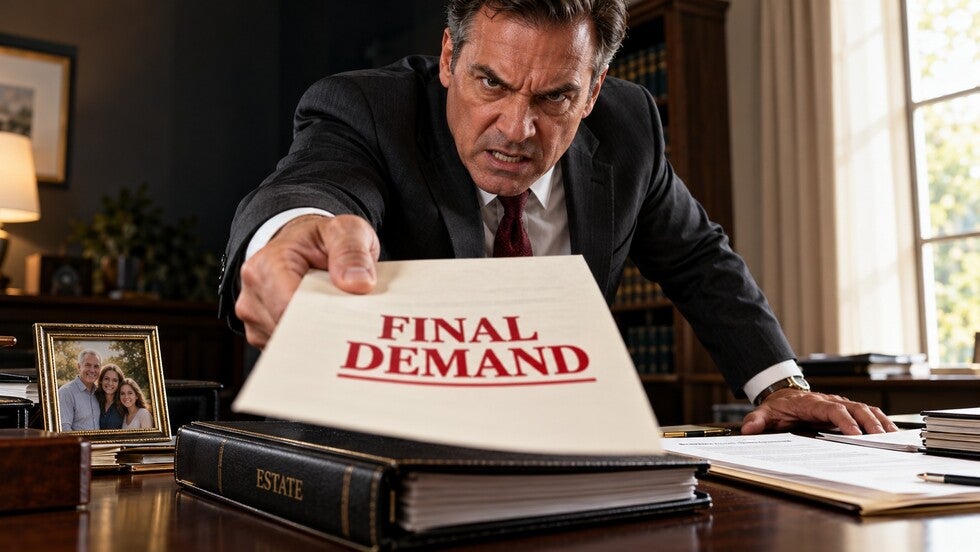
A medical bill arrives more than a year after a parent dies. The trustee wants to finish the inheritance. Should the trustee pay the bill, ignore it or keep holding the family's money?
The envelope does not answer that question. Neither does the first anniversary of death, standing alone.
California's one-year rule can be a powerful defense against a late creditor claim. But it does not mean every obligation disappears after twelve months or that a trustee can distribute everything without examining the file. The useful question is whether this particular claim remains enforceable, through which procedure, against which property or person.
For Orange County families, begin with Risk Exposure Mapping: identify the obligation, the dates, the assets and the person authorized to act. Then coordinate the documents, ownership, funding and implementation. That sequence can prevent both an unnecessary payment and a premature distribution.
Start With the Death Date and the Type of Liability
Code of Civil Procedure section 366.2 generally gives one year after death to commence an action on a surviving personal liability of someone who died before the otherwise applicable limitations period expired. It reaches liabilities arising in contract, tort or otherwise, including claims that had not yet accrued.
That can substantially shorten the ordinary deadline. A creditor should not assume an unpaid contract keeps its usual limitations period simply because the contract originally allowed more time. Conversely, death does not revive a claim already barred before death.
Have counsel classify the obligation first. A decedent's unpaid account, a secured lender's rights against collateral, an insurance-only recovery and a trustee's own later conduct can involve different rules. Applying the same anniversary date to every item creates false confidence.
Record the verified death date promptly. Ask counsel to calculate the applicable deadline, including statutory time-computation rules. Calendar earlier internal review dates so the family is not collecting records on the last possible day.
Three Clocks That Families Often Confuse
| Clock | What it concerns | What to verify |
|---|---|---|
|
One year after death |
Section 366.2's general action deadline |
Whether it applies and whether a recognized exception or tolling rule matters |
|
Probate claim period |
Presenting a claim in an estate administration |
Letters, creditor notice, filing and service records |
|
After rejection or another procedural event |
The next step for an asserted claim |
The governing provision, notice and separate deadline |
In a probate administration, Probate Code section 9100 generally requires a claim by the later of four months after letters first issue to a general personal representative or sixty days after notice of administration is mailed or personally delivered to the creditor. That provision does not revive a claim already barred by section 366.2.
The clocks interact. A creditor cannot safely select whichever produces the latest date. Nor should a trustee assume that an anniversary necessarily ends a claim that was properly preserved earlier.
A Timely Claim Can Matter Without a Lawsuit
One statement deserves particular care: “Every creditor must file a lawsuit within twelve months.” That is too broad.
Section 366.2 expressly recognizes specified statutory exceptions to its restriction on tolling and extensions. These include the probate estate and revocable-trust creditor-claims provisions.
For example, Probate Code section 9352 provides tolling upon filing a claim or a qualifying petition to file a claim, through allowance, approval or rejection. Allowance or approval can produce further tolling during administration for the allowed portion. Timeliness and compliance still matter; a demand letter is not automatically a properly filed claim.
After rejection, another deadline may govern an action on the claim. Counsel should review the actual notice and applicable statute immediately. A general article is not a substitute for calculating that date.
For the trustee, this means checking what was filed and when. “No lawsuit found” is useful information. It is not a complete limitations analysis.
A Revocable Trust Does Not Erase the Debt Question
Holding property in a living trust can avoid probate for that property. It does not, by itself, remove the deceased settlor's creditor exposure.
Under Probate Code section 19001, property subject to the deceased settlor's power of revocation at death can be available for qualifying creditor claims and probate-administration expenses to the extent the probate estate is inadequate.
There is an optional statutory trust creditor-claims procedure. Whether to use it requires an informed decision about the assets, known obligations, costs and administration. Informally mailing a creditor does not necessarily establish that procedure or its deadlines.
Section 19008 addresses the situation where there is no probate administration and the trustee has not undertaken the specified notice-and-publication process. The trust's liability is then governed by otherwise applicable law. No probate case does not mean no possible claim.
Spears Explains Why the Procedural Route Matters
In Spears v. Spears (2023) 97 Cal.App.5th 1294, the Court of Appeal distinguished an open probate administration from a situation with neither probate administration nor the optional trust creditor procedure.
In the latter setting, the court recognized a route to pursue a claim against the trustee to reach trust assets without first opening probate and obtaining a judgment against an estate representative. Applicable limitations and the merits still had to be satisfied.
The practical point is narrow but important: do not reject a claim merely because the creditor did not first open probate. Counsel must identify the available route under the actual circumstances. A form's missing case number is a reason to investigate, not a legal opinion that nothing can be enforced.

Review a Late Medical Bill Before Reaching for the Checkbook
Consider a hypothetical parent who dies in June. More than a year later, a collector sends the successor trustee a hospital balance. The family believes the insurance company already paid. There is no known lawsuit.
The trustee needs evidence, not an immediate yes or no. Collect the itemized account, service dates, insurance explanations, contractual adjustments, payments, assignment information and every earlier communication. Determine whether the demand duplicates an amount already paid or includes a balance the patient was not responsible for.
A posting date after death does not necessarily mean medical services were performed after death. It might reflect delayed billing, a correction or an insurance adjustment. Ask the provider to explain the entry rather than treating the date as proof of an impossible service.
Next, have counsel examine the claim's history: Was probate opened? Was a claim filed and served? Was a trust claims procedure used? Was an action already pending? Did anyone make representations that affected the creditor's conduct? What limitations defense or exception applies?
If a supported limitations defense applies, the trustee should obtain advice about asserting it and preserving the response. If the claim was timely preserved, its substance still needs review. Small amounts deserve proportionate handling, but a small demand should not bypass the basic checks.
The Anniversary Is Not a Universal Release
The statute restricts tolling, but its text contains exceptions. Other statutes also address particular claims and remedies. Certain insurance and lien-enforcement situations illustrate why “all debts end after one year” is unsafe; see the discussion in Bradley v. Breen (1999) 73 Cal.App.4th 798.
Equitable estoppel is a separate issue. In Battuello v. Battuello (1998) 64 Cal.App.4th 842, the court recognized that conduct inducing delay can prevent reliance on a limitations defense in appropriate circumstances. That does not give every late creditor extra time. It means communications and promises belong in the review file.
Taxes, governmental claims, secured obligations and post-death administration liabilities need their own analysis. A successor's later breach of duty should not be treated as merely an old debt of the deceased person.
Notice duties also remain important. In probate, section 9050 addresses notice to known or reasonably ascertainable creditors. Do not use the one-year rule as an instruction to conceal a death, ignore required notices or encourage a creditor to wait.
Distributions Can Move the Exposure to Beneficiaries
A payment to beneficiaries does not necessarily make an unresolved claim disappear. Probate Code section 19400 addresses beneficiary liability where there is no probate administration and the specified trust creditor process was not undertaken, subject to section 366.2.
Section 19402 supplies defenses, proportional limits and a distribution-value ceiling. Liability under that chapter depends on the claim not being satisfiable from the trust estate. It is not unlimited personal liability merely because someone inherited.
The trustee should therefore assess claims before releasing the assets needed to address them. A beneficiary's agreement to an early distribution is useful evidence of consent, but it does not automatically bind creditors, other beneficiaries or government agencies.
Our successor-trustee readiness guide explains why appointment, authority and practical access must be coordinated. Receiving the title of trustee is only the start of the assignment.

Make the Distribution Decision Explainable
Prepare a short claim register: creditor, amount, basis, service or transaction date, first notice, procedural filings, response deadline and current status. Keep copies behind the register. Separate disputed amounts from undisputed administration expenses.
Then prepare a distribution worksheet showing available cash, expected expenses, taxes under review, unresolved claims and the proposed reserve. Ask counsel what can be distributed, what should remain and when the reserve should be reconsidered. There is no reserve percentage that fits every trust.
Keep the written basis for each decision. Record who reviewed it, the evidence used and any conditions on a partial distribution. Appropriate court instructions or approval may be worth considering where authority, conflicts or material uncertainty remain.
Families can improve this handoff while the owner is living. Maintain accurate ownership records, adviser contacts, debt information and accessible instructions. Our seven-question estate-planning risk map starts with the decisions the family must be able to make before selecting documents.
Frequently Asked Questions
Does Every Creditor Have Exactly One Year?
No. Section 366.2 is a general rule for qualifying surviving liabilities. Claims procedures, statutory exceptions and other legal issues can affect the result. Obtain the deadline for the actual claim.
Is a Demand Letter the Same as a Filed Claim?
No. A bill or letter does not automatically satisfy the applicable filing and service requirements. Preserve it and investigate the complete procedural record.
Can a Timely Probate Claim Preserve Rights Without a Lawsuit?
Yes, statutory tolling can apply. Section 9352 is an important example. Subsequent allowance, rejection and notice may affect the next required step and deadline.
Must a Creditor Always Open Probate Before Reaching Trust Assets?
No. Spears explains a route where neither probate administration nor the optional trust creditor process has been undertaken. Procedure and timeliness still require individual review.
Can the Trustee Distribute Everything After the First Anniversary?
Not merely because that date passed. Review preserved claims, taxes, expenses, trust instructions and other obligations before deciding what to release.
Should I Personally Pay a Deceased Parent's Bill?
Do not assume family relationship alone requires payment. Separate personal obligations, guarantees, spousal rules and possible distribution liability from the decedent's debt. Have counsel identify the proper payor before using personal money.
Short Summary
The one-year rule matters because delay can defeat a qualifying creditor's remedy. Its safe application requires the claim history, correct procedure and exceptions—not just a calendar anniversary. A trustee should document the payment and distribution analysis before releasing family assets.
Give Your Successor More Than a Binder
If your family faced a late bill tomorrow, could your successor find the trust, ownership records, debt history and authority needed to respond? Make that handoff clear while you can still direct it. For a new foundational estate plan or full restatement, request a Situation Readiness Briefing and complete the required Risk Exposure Mapping Form. We begin with the decisions your family will need to make, then determine the appropriate planning scope.
Qualified foundational briefings may be no-charge. Asset protection and advanced planning are separate billable consultations arranged through the office at (949) 305-8642. An existing creditor demand or pending deadline requires prompt review by appropriate trust-administration or litigation counsel; this planning intake does not accept that dispute for representation.
Law Office of James Burns, 6B Liberty, Suite 130, Aliso Viejo, CA 92656. (949) 305-8642.
Sources and Review Date
California statutory text and the linked published appellate opinions were checked October 23, 2026. Official Legislative Information pages are linked for the cited sections; published opinions are available through the linked case-text reproductions. These sources support the general framework, not a conclusion about a particular demand or distribution.
Disclaimer
Attorney advertising. General California planning education, not individualized legal, tax or financial advice. Deadlines, procedures and liability depend on the facts and current law. Do not ignore a demand, miss a deadline or distribute property in reliance on this article. Reading it or contacting the firm does not establish an attorney-client relationship. No result is guaranteed.
IP Disclosure
Original commentary and organization © 2026 Law Office of James Burns. All rights reserved. The example is hypothetical and does not describe a client or achieved result. The three images are AI-generated conceptual illustrations, not client photographs or records. No ownership is claimed in statutes, judicial opinions or other government materials.

Comments
There are no comments for this post. Be the first and Add your Comment below.
Leave a Comment